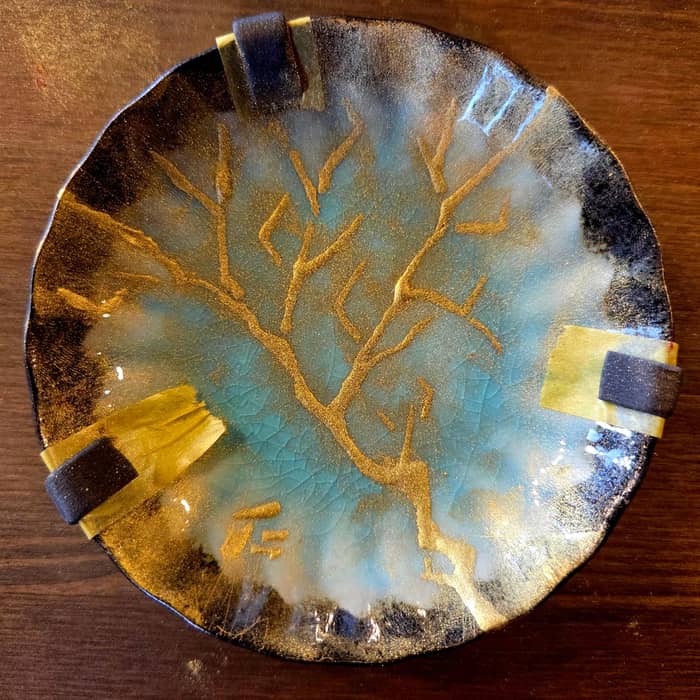
Cheapest
Mend a pot
Kintsugi, 1.5 hours
- Time1.5 h
- Class size10 places
- Pricefrom $9
Total for you all
4 sessions compared
Enter how many are coming and compare the totals.
≈
View≈
View≈
View≈
ViewEach total uses the lowest from price on its listing, converted by the ECB reference rate; the exact amount is fixed at checkout.
Search for a pottery class in Kyoto and you get three different things under one name. Some classes repair broken ceramics with gold, a few let you shape clay, and one pottery district sells and teaches in the open. This page sorts them out.
Editorial team, kintsugiworkshopkyoto.com · Updated November 2, 2026 · Roughly 6 minutes to read
Pottery in Kyoto, sorted
The phrase pottery class covers more ground than it seems to. On the booking platforms, the Kyoto classes that carry the word pottery are mostly kintsugi classes: you repair a broken piece, you do not shape new clay. One Viator class is even called a Kyoto kintsugi gold repair pottery class, and a GetYourGuide listing is titled a kintsugi pottery workshop with an optional upgrade.
True wheel or hand-building classes exist but are thin on the ground. The only one in our records is a GetYourGuide small-group pottery workshop by master artisans, with seven reviews averaging 4.74, which is a very small sample next to the thousands of ratings the kintsugi classes carry. That does not make it bad. It means we cannot tell you how it compares, and you should read its listing closely.
So the honest answer is that the Kyoto market has three routes. You can mend pottery in a class, you can make a pot in a small studio session, or you can go to the pottery district and try making coil pots there. Each suits a different traveler, and the rest of this page lays out what each costs, how long it takes and what you walk away with.
Entry routes
| Route | Activity | Where to book | Fare begins |
|---|---|---|---|
| Kintsugi pottery class | Mend a cracked piece | Viator or GetYourGuide | $9 |
| Pottery workshop with upgrade | Mend a piece, 1.5 hours | GetYourGuide | $18 |
| Small-group pottery workshop | Shape clay, 1 to 2 hours | GetYourGuide | $83 |
| Zen garden in a pottery shop | A 30-minute session | GetYourGuide | $13 |
| Kiyomizuyaki no Sato studio | Coil pots or bisque painting | Advance booking, direct | Not in our sources |
From prices per person on the platform records; the museum studio's own fee is not stated in the sources we hold.4
Kyoto's pottery has a name for itself. The collective name for the pottery of Kyoto is Kyo-yaki, and traditional craft wares are called Kyo-yaki or Kiyomizu-yaki.6 Kyoto ceramics were produced in the Nara and Heian periods, and the city became a production center in the Azuchi-Momoyama period, known for variety of technique, gorgeous colors and clean beauty.7
A few names anchor the story. Nonomura Ninsei led Omuro-yaki with painted earthenware, and Ogata Kenzan and his brother Ogata Korin made the daring wares known as Kenzan-yaki.8 Raku-yaki is said to have started in the latter half of the 16th century and is noted for a low firing temperature and simplicity of design.9 The Tokyo Metropolitan Government's guide to national crafts traces Kyo-yaki from the 17th century potters through the invitation of German ceramists at the end of the 19th century.10
Kiyomizu ware is a kind of stoneware, and the Japan National Tourism Organization notes it is often mistaken for porcelain because of its fine appearance.11 Why does that matter for a visitor? Because when you hold a Kiyomizu-yaki bowl in a shop or a studio, you are holding the product of a tradition whose wares Kyoto's museums call traditional craft wares,6 and the class you take is a chance to understand the work behind it.
Cost by session
From prices per person on each listing record, not exact quotes.
The easiest way to spend an hour with Kyoto pottery is to repair it. The most-rated kintsugi class near Gion runs 1.5 hours for a group of up to 10, and you work on a cracked or chipped bowl or plate with lacquer and gold powder. Its sister, the Kyoto kintsugi pottery class, runs 1.5 hours from $9 in the same building.
The GetYourGuide version is the kintsugi pottery workshop with an optional upgrade, limited to 10 participants, 1.5 hours, from $18, with 354 reviews averaging 4.79. The listing says the optional upgrade is for a second piece, so ask what it costs before you add it. If you want a pot-focused experience without the complexity of a wheel, this is the lowest-risk way in.
What do you take home? A repaired object, and the sense of how much patience goes into a glued-and-gilded seam. It is not a pot you shaped, and it will not tell you how Kiyomizu-yaki is made. But it is a hands-on craft hour in a Kyoto studio, rated by hundreds or thousands of guests, and it fits easily into a day that also holds a temple and a lunch.
Which route
Say what you want to hold at the end of it
If I want a gilded repair
A kintsugi pottery class
It runs 1.5 hours from $9.
If I want to shape clay
The small-group pottery workshop
It runs 1 to 2 hours.
If I have only half an hour
The Zen garden stop
It runs 30 minutes.
If I want to see where Kyoto ware is made
Go to Yamashina
The trip takes about 30 minutes.2
If I want to buy at the fair
Come in October
The fair has more than 100 stalls.5
Mend, make, taste
Cheapest
Kintsugi, 1.5 hours
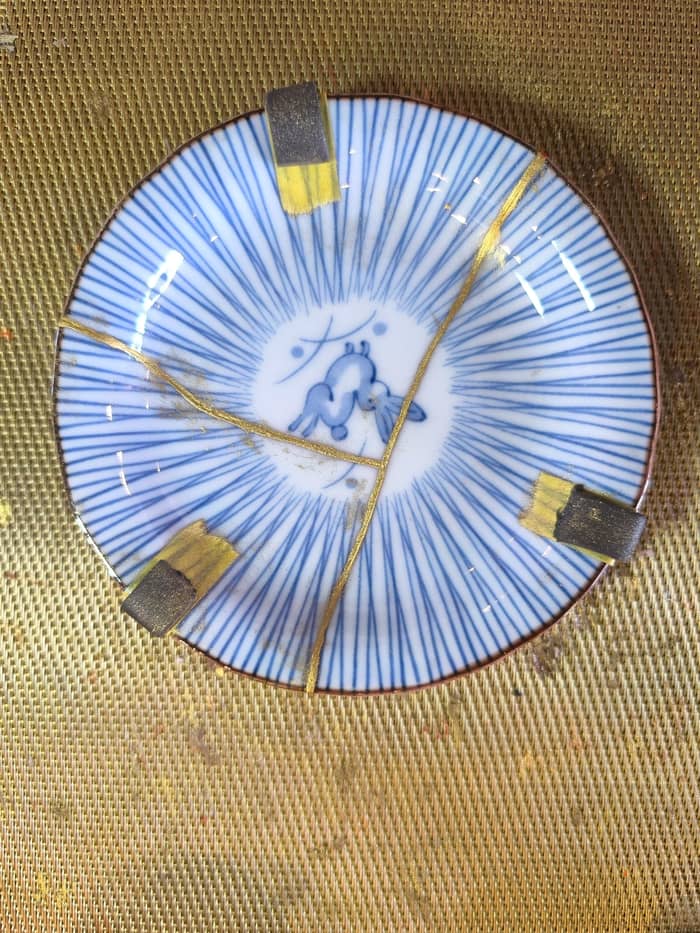
Hands in clay
Small-group studio
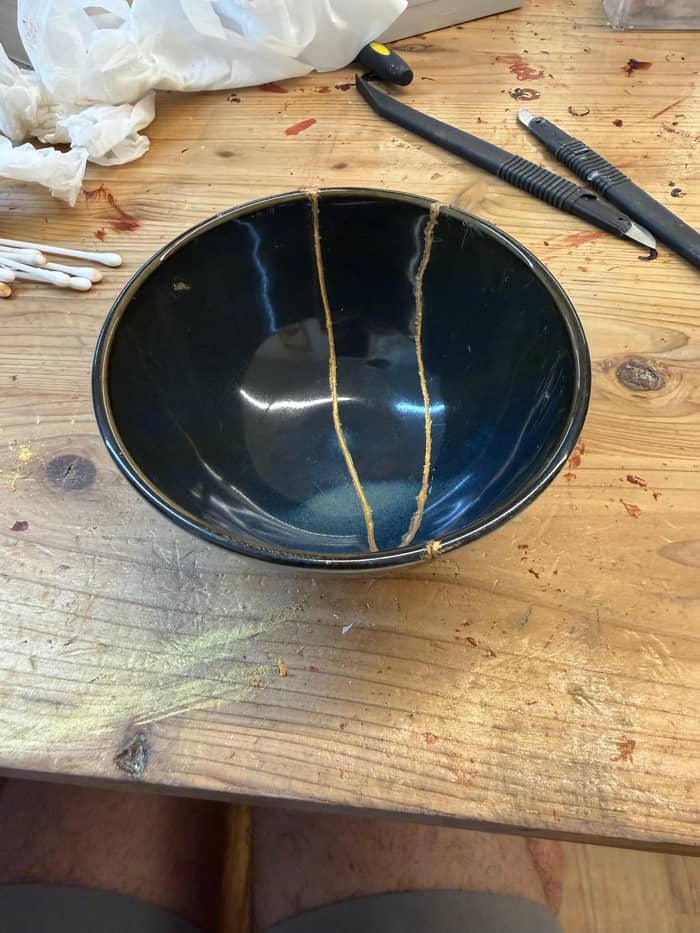
Shortest
A pottery shop
If shaping clay is the point, the GetYourGuide small-group pottery workshop is the listing to look at. It runs 1 to 2 hours, is available for private or small groups with an English-speaking instructor, and starts from $83. That is far above the kintsugi classes, which is typical when you are paying for clay, firing and an instructor's close attention.
A lighter taste of pottery is on offer in a Kyoto pottery shop, where a 30-minute session lets you make a Zen garden and taste matcha, for groups limited to 8, from $13, with 5 reviews averaging 5.00. Five reviews are a very small sample, so treat the perfect score as a promise of friendliness, not evidence of quality. It is a short stop, not a pottery class in the full sense.
Expect fewer reviews and higher prices on this route. That is the nature of a small studio: fewer places, more individual attention, and less of the volume that fills a kintsugi bench. If you want a wheel class on a tight itinerary, book early and read the cancellation line, because small studios cannot always rebook a cancelled seat.
A pottery-district day
Start
Take the Tokaido-Sanyo Line from Kyoto Station to Yamashina Station.2
The onward ride
A bus from Yamashina Station goes to the Kiyomizuyaki-danchi stop; the whole trip takes about 30 minutes.2
Browse
The complex is home to nearly 70 shops and companies selling Kiyomizu ware.1
At the studio
The museum studio lets visitors make coil pots or decorate bisque-fired pots; advance booking is required.4
October visit
A pottery fair with more than 100 stalls runs on the third Friday, Saturday and Sunday.5
Kyoto's potters left the old city in 1962. Many moved to Yamashina-ku, to an area now called Kiyomizu-yaki-danchi, over efficiency and kiln-smoke concerns.12 The Kiyomizuyaki Pottery Complex there is home to nearly 70 shops and companies involved in the sale of Kiyomizu ware, and visitors can join a pottery class and try throwing pottery.1,13
The Kiyomizuyaki no Sato museum there has a studio where visitors can try making coil pots or decorating bisque-fired pots, with advance booking required.4 The route from Kyoto Station is the Tokaido-Sanyo Line to Yamashina Station and then a bus to the Kiyomizuyaki-danchi stop, about 30 minutes in all.2 This route books directly with the studio, not through a platform.
Come in October if you can. The Kiyomizuyaki no Sato Matsuri pottery festival is held on the third Friday, Saturday and Sunday of October each year, with more than 100 pottery stalls.3,5 Extra buses run from Kyoto Station to the festival, and ceramics are on sale at steep discounts, according to the national tourism organization.14 It is the best day of the year to buy a bowl and the worst to find a quiet studio seat.
Video
Artisan Japan on YouTube · Nothing loads from YouTube before you press play.
Kiyomizu ware is a kind of stoneware; because of its fine appearance, it's often mistaken for porcelain.
Checklist
Pick by outcome. If you want a gilded object and a one-hour memory, take a kintsugi pottery class from $9 to $18. If you want to shape clay and accept a higher price and a thinner review base, try the small-group workshop from $83. If you want the context of a working pottery district, go to Yamashina and book the studio there.
Pick by time. A kintsugi class takes 1.5 hours and the Zen garden stop 30 minutes, while the small-group pottery workshop runs 1 to 2 hours and the district visit can fill a half day. The district is the only route that cannot be squeezed between a morning temple and a late lunch without making the trip a feature of the day.
Pick by flexibility. The platform listings here allow free cancellation up to 24 hours before the start. The district studio needs advance booking and its own terms, which the sources do not state. Whichever route you choose, treat every price as a from price, and check your date before you commit.
FAQ
A kintsugi pottery class starts from $9, a small-group pottery workshop from $83.
Visitors at the Kiyomizuyaki Pottery Complex can join a pottery class and try throwing pottery.13
A Zen garden stop runs 30 minutes, a kintsugi pottery class 1.5 hours and a pottery workshop 1 to 2 hours.
It takes about 30 minutes from Kyoto Station by train and bus.2
It is often mistaken for porcelain because of its fine appearance.11
The platform listings compared give free cancellation up to 24 hours in advance.
Sources
Keep reading
A question about the class? A person answers here.