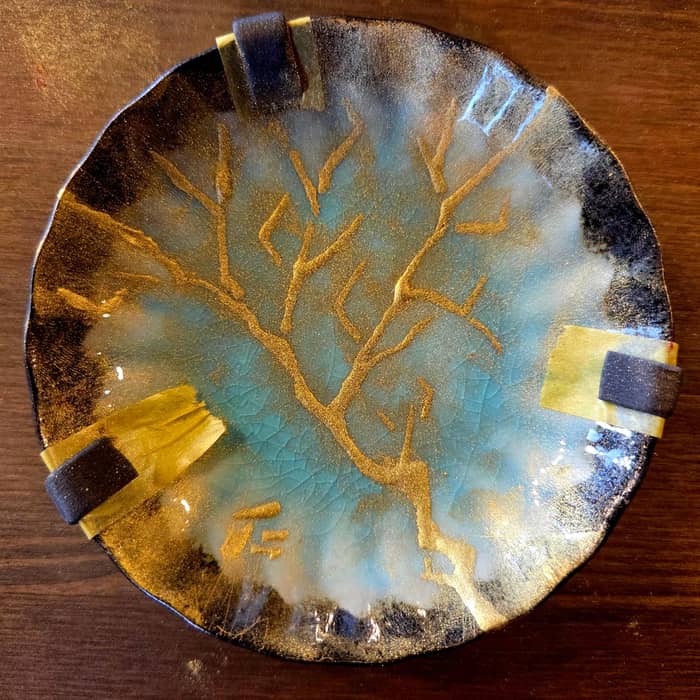
Most-rated
The Asakusa classic
Tokyo, 1 hour
- Ratings1,300
- Class size30 spots
- Pricefrom $15
Total for you all
4 sessions compared
Enter how many are coming and compare four sessions in both cities.
≈
View≈
View≈
View≈
ViewEach total uses the lowest from price on its listing, converted by the ECB reference rate; the exact amount is fixed at checkout.
If your route runs through Tokyo or Osaka rather than Kyoto, you can still mend a bowl with gold. This page lines up the kintsugi classes in both cities by length, class size and price, and says when it is worth waiting for Kyoto.
Editorial team, kintsugiworkshopkyoto.com · Updated November 2, 2026 · Roughly 6 minutes to read
Tokyo and Osaka at a glance
Kintsugi is not tied to one place. The method is the same wherever you sit down: lacquer, metal powder and a cracked piece of ceramic. What changes from city to city is the venue, the size of the room and the price. Tokyo has a deep bench of classes, Osaka a short one, and both are worth knowing about if your itinerary does not pass through Kyoto.
There is a historical reason to still think of Kyoto as the craft's home ground. Taito City, which runs a traditional crafts museum in Tokyo, says the art of Japanese craftwork first bloomed in Kyoto and was introduced to Edo after the Edo shogunate was established.2 A class in Tokyo is therefore a branch of a tradition that began elsewhere, which does not make it a lesser experience, only a different setting.
The practical rule is simple. If Tokyo or Osaka is where you will be on the day, book a class there and enjoy it. If you are choosing between a Kyoto day and a Tokyo day for a class, do not choose on the strength of the craft alone: the sessions compared here are all short, and the listings do not suggest any of them is a one-of-a-kind master lesson.
Seven sessions
| City | Session | Length | Class size | From |
|---|---|---|---|---|
| Tokyo | Asakusa, Viator | 1 h | 30 spots | $15 |
| Tokyo | Asakusa, GetYourGuide | 1.5 h | Unlisted | $24 |
| Tokyo | Basement atelier | 1 h | Up to 20 | $58 |
| Tokyo | Shibuya accessories | 1.5 h | 6 places | $44 |
| Tokyo | Gold repair workshop | 1.5 h | Unlisted | $10 |
| Osaka | Namba, real urushi | 1.5 h | 5 places | $123 |
| Osaka | Beauty in Brokenness | 3 h | 6 places | $86 |
Lengths, class sizes and prices from the listing records; 'Not stated' means the record gives no cap. Prices are from prices, not quotes.
Asakusa is the busiest address for kintsugi in Tokyo. A Viator class there runs 1 hour for a group of up to 30, with a live guide in Japanese and English, on the 10th floor of its building, and it carries 1,300 ratings averaging 4.93 from $15. A GetYourGuide class in Asakusa runs 1.5 hours from $24, with 844 reviews averaging 4.88.
Asakusa also makes it easy to build a craft day. Senso-ji is a five-minute walk from Asakusa Station, which is served by the Ginza, Asakusa and Tobu lines.3 Nakamise Street nearby sells traditional crafts, printed cotton kimono and Japanese sweets.5 The Edo Taito Traditional Crafts Center holds around 250 objects covering about 50 styles of traditional craftwork, which gives context to what you make in the class.4
If you want a second hands-on hour, the Japan National Tourism Organization notes that a one-hour Edo Kiriko cut-glass workshop runs at Sokichi in Asakusa, and that Edo Kiriko was officially recognized as a Tokyo traditional craft in 1985.6,7 Pair it with kintsugi and you have a pair of small crafts in one afternoon, in a neighborhood where the walking is short and the lunch options are plentiful.
Price per head
From prices per person on each listing record, not exact quotes.
Not every Tokyo class is a plate-and-gold session. One Viator workshop in a basement atelier near the Pasona Square building offers yobitsugi, which inlays pieces in contrasting colors or materials where the damage is, runs 1 hour for up to 20 people, and starts from $58 with 504 ratings averaging 4.89. It costs more than the plain Asakusa classes because the project is different.
A Shibuya session turns the craft toward accessories. The GetYourGuide kintsugi accessory workshop runs 1.5 hours, is limited to 6 participants, and starts from $44, with 113 reviews averaging 4.79. That is the Tokyo counterpart of the Kyoto jewelry class: you leave with something to wear, not a bowl to display.
For the lowest Tokyo price, a 1.5-hour GetYourGuide kintsugi gold repair workshop starts from $10, with 94 reviews averaging 4.92. A smaller review count means a thinner sample, so treat that rating with a little caution. For a first class, the Asakusa pair has the larger track records.
Which city
Start with the city you are already in
If I am in Tokyo and want the safe bet
The Asakusa class
It has 1,300 ratings averaging 4.93.
If I am in Tokyo and want to spend least
The Tokyo gold repair class
It starts from $10.
If I want something to wear
The Shibuya accessories class
It is limited to 6 participants.
If I am in Osaka and want a small group
The Namba session
It takes up to 5.
If I am in Osaka and want a long session
Beauty in Brokenness
It lasts for three hours.
Where to start
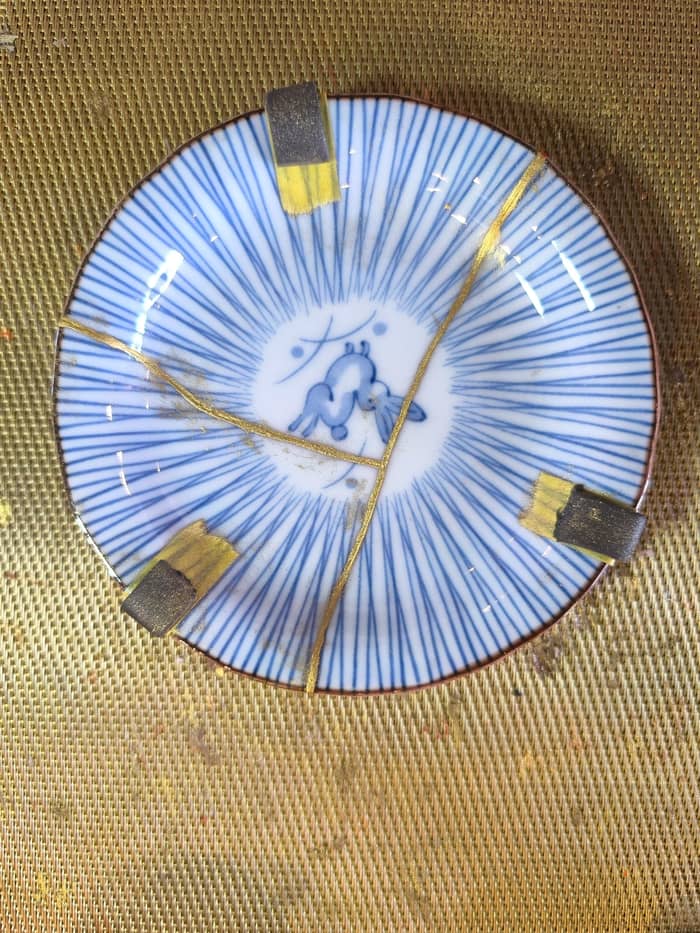
Most-rated
Tokyo, 1 hour
Different project
Tokyo, basement atelier
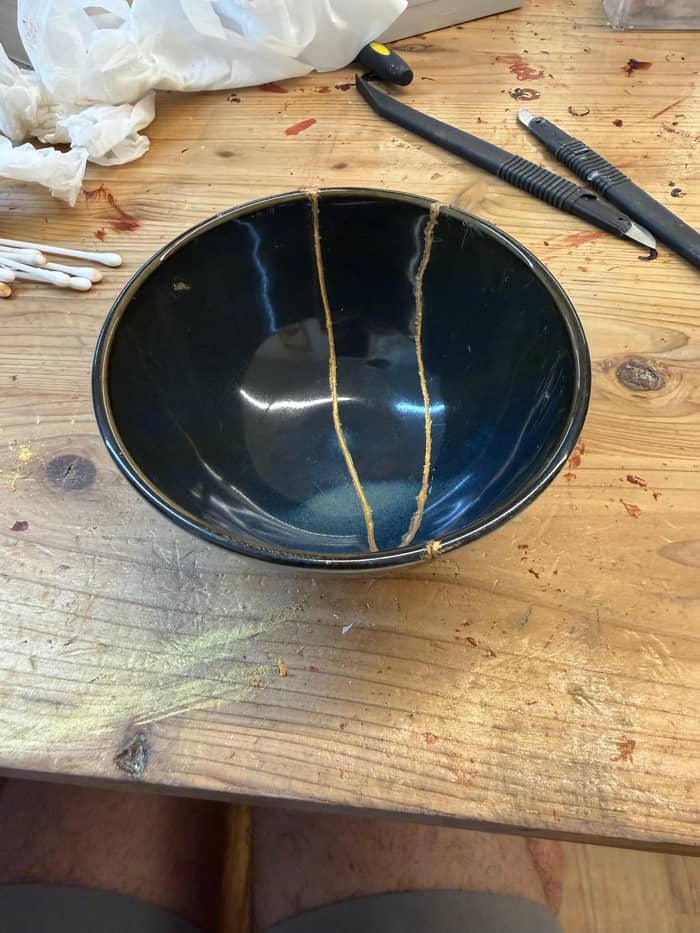
Smallest room
Osaka, small group
Osaka has a shorter list and higher prices, so a kintsugi workshop in Osaka needs a closer look. A Viator kintsugi experience in Namba is run by Zenkei, meets at the Mansion New Namba building, takes up to 5 people for 1.5 hours, and starts from $123, with 91 ratings averaging 4.93. The very small group is what the price buys.
The other Osaka option is a GetYourGuide workshop titled Beauty in Brokenness. It runs 3 hours, is limited to 6 participants, and starts from $86, with 68 reviews averaging 4.93. That is the longest class in this comparison, and the one that most resembles a proper afternoon of work rather than a quick taster.
Both Osaka listings have far fewer ratings than the big Tokyo and Kyoto classes, so their averages rest on thinner evidence. They are also priced well above the Kyoto classes that start under $20. If your trip runs through Osaka and you want a small-group class, they are good options; if budget decides, a Kyoto class is cheaper.
An Asakusa afternoon
Start
Senso-ji is a five-minute walk from Asakusa Station.3
Context
The Edo Taito Traditional Crafts Center holds around 250 objects covering about 50 styles.4
Class
The Asakusa class runs 1 hour on the 10th floor of its building.
Browse
The street sells traditional crafts, printed cotton kimono and Japanese sweets.5
Optional
An Edo Kiriko workshop in Asakusa runs 1 hour.6
Search results can mislead on place. One Viator listing is titled Osaka Traditional Kintsugi Workshop in Gion Gold Repair Art, yet its own description places the hands-on workshop in Kyoto, and it meets on the 8th floor at a chopsticks and kintsugi workshop. It runs 1 hour for up to 15 people from $15, with 277 ratings averaging 4.94.
We do not treat that listing as an Osaka class. A title that names two cities is a reason to read the meeting point before paying, not after. Check the address in the booking confirmation, and look for the city in the meeting-point line rather than the headline.
The same habit protects you in Tokyo, where several classes sit in different wards. Asakusa, Shibuya and the basement atelier are far enough apart that a wrong guess costs real travel time. Open the map link in your confirmation email before the day and confirm the station. A few minutes of checking the night before is cheaper than a missed start in a session that is over in an hour.
Video
7Wayfinders on YouTube · Nothing loads from YouTube before you press play.
The art of Japanese craftwork first bloomed in Kyoto, and was introduced to Edo after the Edo shogunate was established.
Checklist
Start with where you will sleep. JR Central says you can reach Kyoto from Tokyo in about 130 minutes by Shinkansen, and puts the Tokyo to Osaka journey at 2 hours 21 minutes.1,8 Those are comfortable rides, but nobody should cross Japan for a one-hour class when the same craft is on offer in the city where they are already staying.
Then look at price and sample size. Kyoto classes start from $9 to $18 and carry rating counts in the hundreds and thousands. Tokyo starts from $10 and the best-proven Asakusa class from $15. Osaka starts from $86 for a 3-hour class and from $123 for the Namba session.
If you have a choice, Kyoto offers the most classes and the deepest craft context, which is why this site is built around it. Tokyo is the best second choice for a cheap, well-proven class. Osaka is the pick for a small group. Whichever you choose, the booking rules are friendly: the sessions compared here allow free cancellation up to 24 hours before the start.
FAQ
An Asakusa class runs 1 hour and has 1,300 ratings; another runs 1.5 hours from $24.
The range runs up to $58 for a yobitsugi session.
A Namba session takes up to 5 for 1.5 hours, and a 3-hour class takes up to 6.
JR Central gives that figure for the ride from Tokyo.1
Its own description places the workshop in Kyoto, on the 8th floor.
The Asakusa class takes up to 30; the Shibuya session only 6.
The Asakusa class gives a full refund 24 hours in advance.
Sources
Keep reading
A question about the class? A person answers here.