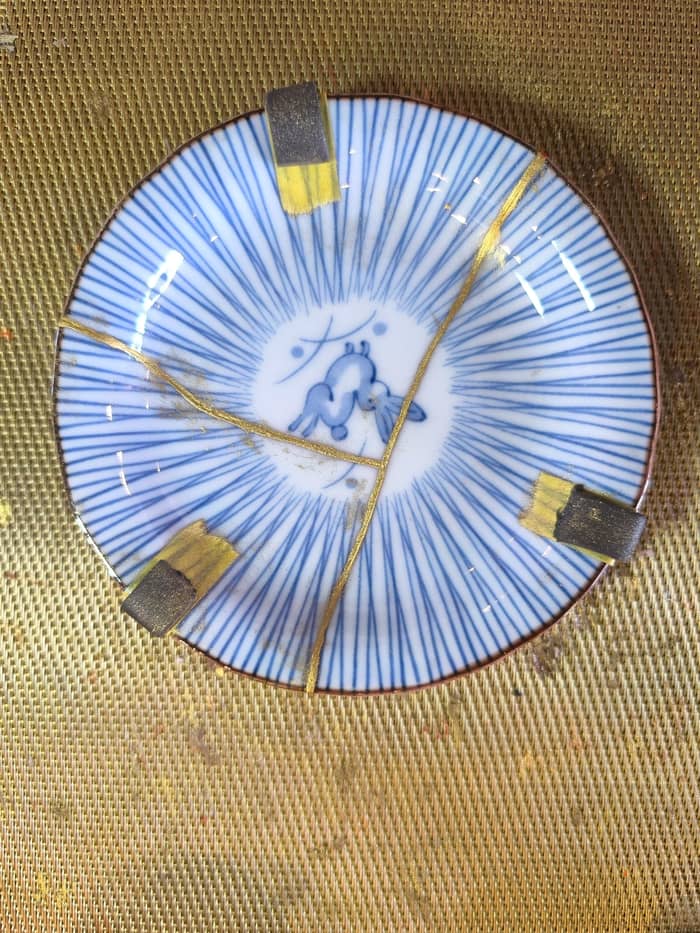
Most-rated
The standard bench
Gion and Kawaramachi
- Time1.5 h
- Group10 places
- Pricefrom $18
Items to tick off
A brief reply
A kintsugi class in Kyoto runs about 1.5 hours for a group of up to 10, and you take home the bowl or plate you repair.
Class essentials
To do · 8 points
Tick items off as you go; the ticks are saved on this device.
0 / 8 ready
Complete here. Only the date is left: your place at the bench.
Save my spotA kintsugi class teaches you to mend a cracked or chipped bowl or plate with lacquer and gold powder, then lets you keep it. This is how a session runs, what to expect on the price tag, and what to ask before you book.
Editorial team, kintsugiworkshopkyoto.com · Updated November 2, 2026 · Roughly 6 minutes to read
The key points
A kintsugi class starts with something broken. In the Kyoto session this site is built around, you repair cracked or chipped ceramic pieces, working on a bowl or a plate, with lacquer and gold powder, while an experienced instructor walks you through the basic techniques. The listing names no skill requirement, and the aim is a finished piece you take away.
The material behind the gold line is urushi, a lacquer made from the sap of the urushi tree. It is toxic, it belongs to the poison ivy family, and it irritates the skin and throat of sensitive people.1 Tell the instructor about any allergy before the brush comes out, and keep your hands off your face until the session is over.
Gold goes on last. In the traditional method the metal powder is dusted onto the urushi before it has completely dried, and the piece rests in a sealed damp box that controls the drying.2 A beginner class has to compress those steps. A workshop at Japan House in London, for example, used some shortcuts so that beginners could finish a piece.3
Kyoto classes side by side
| Session | Time | Seats | Ratings | From |
|---|---|---|---|---|
| Most-rated class | 1.5 h | 10 | 2,155 | $18 |
| Zen annex class | 1.5 h | 16 | 1,728 | $18 |
| Gion, GetYourGuide | 1 h | Unlisted | 1,112 | $16 |
| Central Kyoto session | 1.25 hours | 16 | 231 | $16 |
| Kintsugi pottery class | 1.5 h | 10 | 229 | $9 |
| Saga studio class | 1 h | 20 | 32 | $10 |
Group caps and times come from the listing records; the Gion GetYourGuide listing gives no cap. Prices are from prices, not exact quotes.
Real kintsugi is slow. The conservator who practised it at the Los Angeles County Museum of Art says that after the metal powder goes on, the urushi needs another week in a humid chamber to set completely.5 No visitor class lasts that long. The listings for Kyoto do not say which lacquer or which drying method each studio uses, so ask the studio how your piece should be treated after you leave, and whether it is meant for food.
The same conservator says it takes a lifetime to become a master of kintsugi.6 Hold on to that when you walk in. You are learning the principle and the feel of the brush, not becoming a restorer. A good class sets a modest goal: a clean seam, a steady hand, and an understanding of why the repair is left visible instead of hidden.
Gold powder is the usual choice in kintsugi but costs much more than brass powder, which the museum used for its own practice exercise.7 That makes a fair question for any studio: does my piece get gold or brass? The Japan House instructor trained alongside Kyoto lacquerware craftsmen and says newer materials have made the craft accessible to learners outside Japan.8 Newer materials are a feature of beginner classes, not a flaw.
Your outlay
From prices per person on each listing record, not exact quotes; the jewelry class at $105 is left off the chart because its bar would flatten the others.
The class behind this site is a Viator listing with 2,155 ratings averaging 4.93, and 2,034 of them are five-star. It meets in a studio near Gion and Kawaramachi, on the 4th floor of a building that also holds a curry restaurant called SPICE HOLIC, and it takes up to 10 people with a live guide in English. The operator is With Japan.
Read the spread before you trust the average. Of those ratings, 89 are four-star, 29 are three-star, 1 is two-star and 2 are one-star. That is how an ordinary, well-run product looks: a large majority delighted, a thin scatter of people who wanted something else. If you are the kind of person who expects a polished atelier, this is a working studio floor in a city building, and the rating counts tell you nothing about the decor.
The listing's inclusions are short: an English-speaking instructor, the finished item to take home, and plate options with paid upgrades, while food and drinks are not included. It gives no itinerary, and review text is not available to us, so we do not quote what guests wrote. What the record does show is a sister class from the same operator, the Kyoto kintsugi pottery class, in the same building and with the same cap on group size. If one is full on your date, check the other.
Which class suits me
Begin with what you most want from the hour
If I have a tight afternoon
The one-hour Gion workshop
It runs 1 hour.
If I want the best-proven class
The most-rated Kyoto session
It carries 2,155 ratings averaging 4.93.
If I want the lowest entry price
The kintsugi pottery class
It starts from $9.
If I want something to wear
The jewelry class
It runs 2.5 hours and uses natural stones.
If I am staying near Arashiyama
The Saga studio class
It runs 1 hour and takes up to 20.
Three kinds of class
Most-rated
Gion and Kawaramachi
Shortest
A Gion workshop
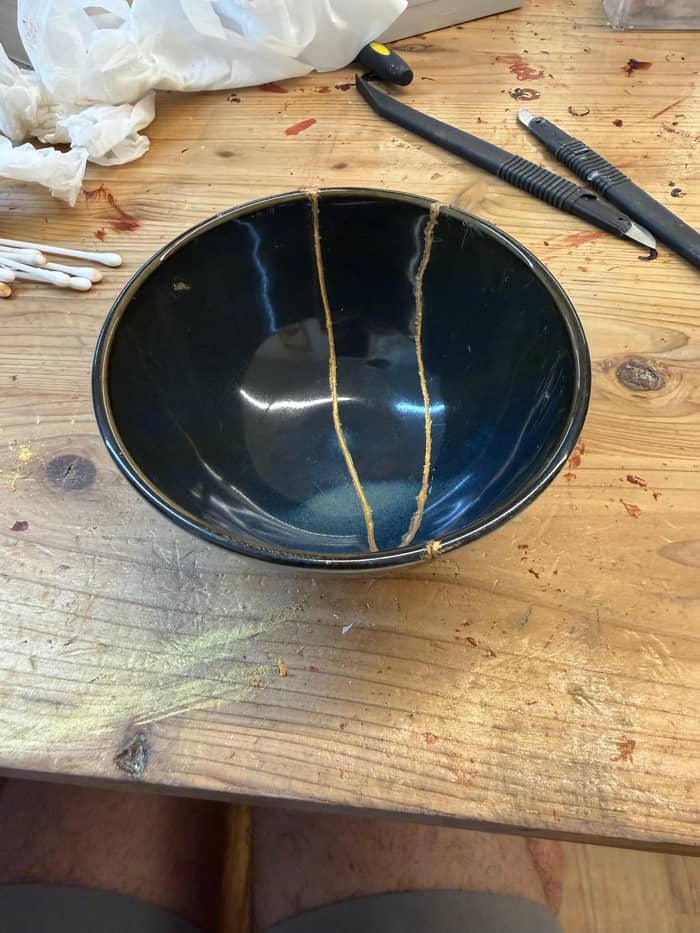
Wearable
Natural stones
Kyoto kintsugi classes on the big booking platforms start low. The cheapest in this comparison is from $9, the most-rated class is from $18, and a one-hour GetYourGuide class in Gion is from $16. Every figure is a from price per person, which is a starting point and not a quote.
Price climbs when the object changes, not when the minutes do. A jewelry class that turns broken ceramic into pieces set with natural stones runs 2.5 hours and starts at $105. That is a different purchase: you leave with something to wear. For a first visit, the plain bowl-or-plate class gives you the craft itself at a fraction of the cost.
Group size is the other lever. The most-rated class caps at 10, while the Zen annex class caps at 16 and the Saga studio class at 20. A smaller room tends to mean more of the instructor's attention, though no listing promises it. All of the classes compared here allow free cancellation up to 24 hours before the start.
Price a class for your group
Enter how many people are coming and compare four Kyoto sessions.
4 sessions compared
Enter how many people are coming and compare four Kyoto sessions.
≈
View≈
View≈
View≈
ViewEach total uses the lowest from price on its listing, converted by the ECB reference rate; the exact amount is fixed at checkout.
A session, step by step
Arrival
The class meets in a studio near Gion and Kawaramachi, in a building that also holds the curry restaurant SPICE HOLIC.
The explanation
You work on a cracked or chipped bowl or plate, and the instructor explains the basic techniques before you begin.
The lacquer
Urushi irritates the skin and throat of sensitive people; mention any sensitivity before you start.1
The gold
In the traditional method the metal powder goes on before the lacquer has completely dried.2
The finish
The traditional last step is burnishing with a smooth tool until the metal turns glossy; your class may shorten it, and the finished piece is yours to take away.4
Time is the first filter for any kintsugi workshop. A one-hour class exists, such as the GetYourGuide workshop in Gion, and so do 1.5-hour classes and a 1.25-hour session in central Kyoto. If your day is already full, the shorter ones fit. If you want to talk with the instructor about the history and the philosophy, take the longer ones.
Place is the second. Our class and its pottery-class sibling are in the Gion and Kawaramachi area. The two annex sessions meet on the 6th floor of the Zen Kyoto Annex, and the Saga option meets at a chopsticks studio on the 2nd floor in Arashiyama's Saga district. If you are already walking the lanes of Gion, the first is simplest. If your day is in the bamboo grove, the Saga class saves a cross-town trip.
The third is the object. A bowl or plate in the standard class is a useful thing to own and to use. A jewelry class gives you a piece of jewelry. A class in another city, such as the Asakusa session in Tokyo, repeats the same craft in a different setting, and we compare those on their own page. Pick the one that fits your itinerary, because the technique you learn in each is the same family of skills.
Video
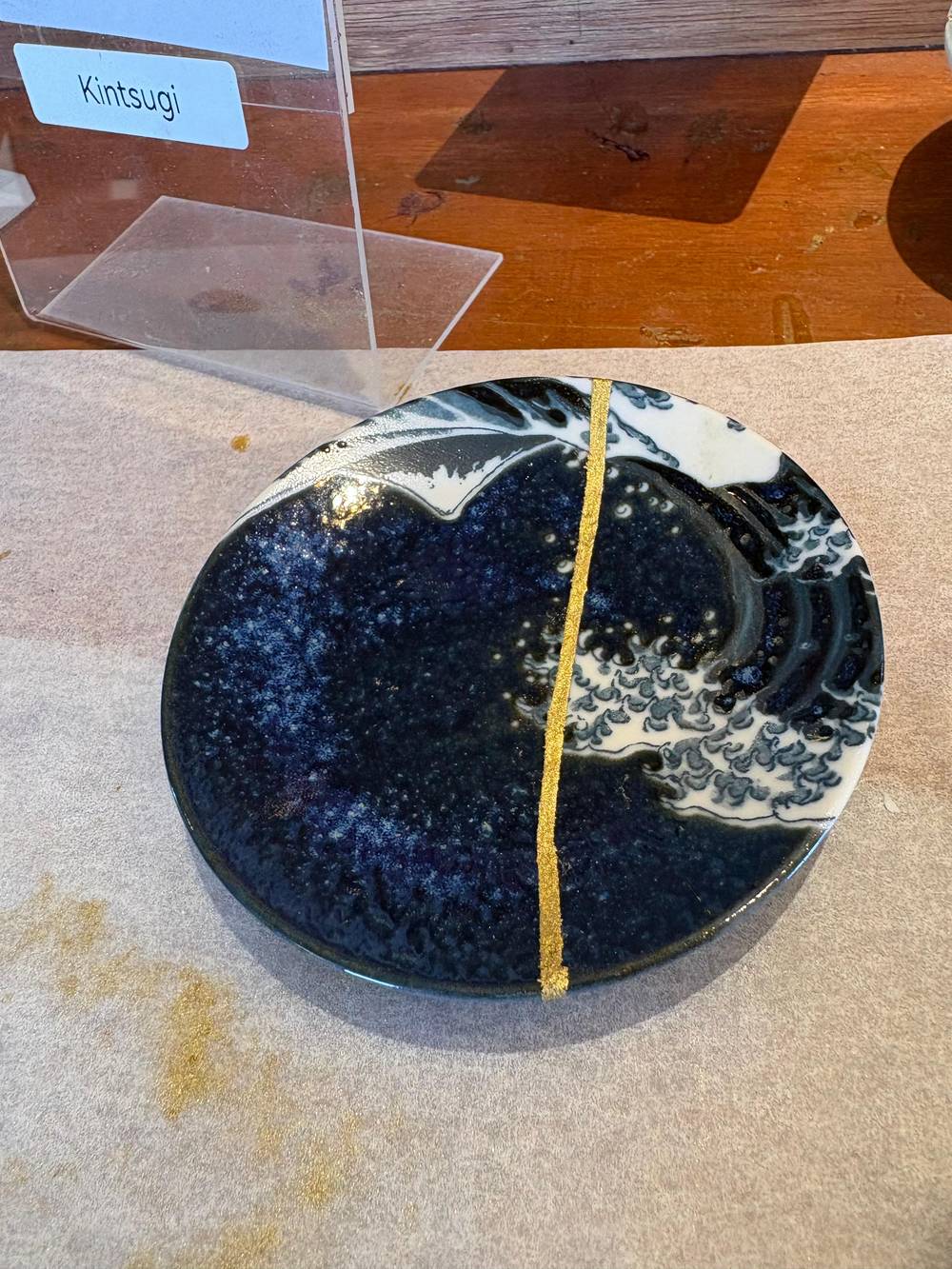
chimahaga on YouTube · Nothing loads from YouTube before you press play.
In the 16th century, when kintsugi was popular in Japan, it was a way for people to mend their pots instead of throwing them away.
You walk out with a repaired object, so think about the journey home. A plate wrapped in clothes survives a suitcase better than a bowl on top of one. Ask the studio how long the seam needs before it is safe to pack, because the listing does not say and urushi is slow to set fully in the traditional method.5 Bring something to wrap it in; a spare scarf or a few sheets of paper will do.
Think of the piece as a decorative object first. Museum practice shows how kintsugi repairs are valued: in historic ceramic collections a kintsugi repair raises an object's monetary and philosophical value.10 Your own bowl will not end up in a museum, but the idea carries: the repair becomes the most interesting part of the piece, and a class is the best way to see why.
If you enjoy the class, you can carry the habit on at home. In the 16th century, when kintsugi was popular in Japan, it was a way of mending pots instead of throwing them away.9 The next time a favorite cup chips, you will look at the crack differently, and you may decide whether to book a longer session in Kyoto or look for a class near home.
FAQ
The most-rated class runs 1.5 hours, a GetYourGuide class in Gion runs 1 hour and a central Kyoto session 1.25 hours.
The sister pottery class starts at $9 and the most-rated class at $18; a jewelry class starts at $105.
The listing names no prerequisite, and an instructor guides you through the basic techniques.
Gold powder is usual in kintsugi but costs much more than brass powder, which some practice sessions use.7 The most-rated class's listing names gold powder without giving its purity.
The most-rated class gives a full refund if you cancel at least 24 hours in advance.
It is on the 4th floor of a building that also holds the curry restaurant SPICE HOLIC.
Urushi is toxic, belongs to the poison ivy family and irritates the skin and throat of sensitive people.1
A jewelry class takes 2.5 hours and uses natural stones, which is a different project from the plain bowl class.
Sources
Keep reading
A question about the class? A person answers here.