


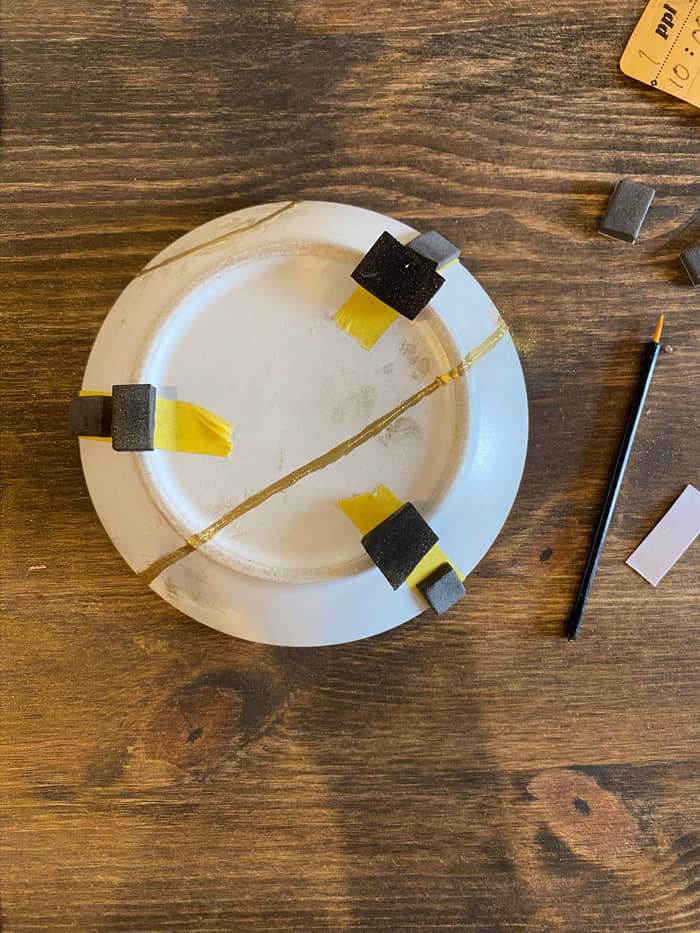
Most-rated Kyoto class
Kintsugi workshop in Gion, Kyoto
★ 4.9 · 2,155 ratings
- Opening pricefrom $18
- Time at the bench1.5 hrs
- Room sizeNot stated
- Cancel ruleIncluded
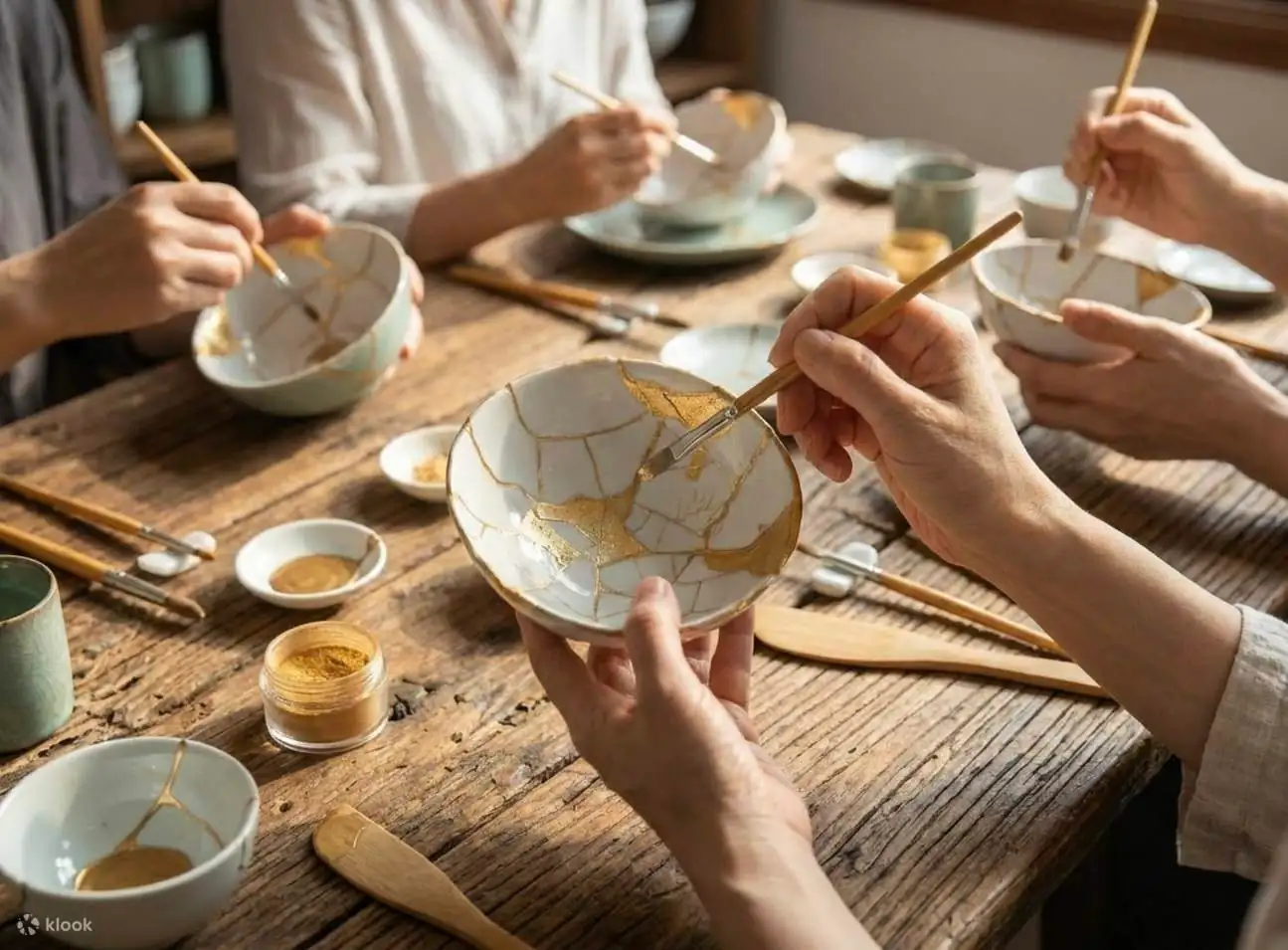
Kyoto · gold seams · 90 minutes
A hands-on session near Gion and Kawaramachi where you mend a cracked bowl or plate with lacquer and gold powder, guided by an instructor, and take the piece home.
Plan your gold repair
Give us a day and a head count: the estimate moves with each change, and the booking page then shows the exact price and open dates.
The practical part
2,155ratings
ratings on Viator, mean 4.93
1.5hours
the length of the session
10people
the most in one class
24hours before
notice for a full refund
Compare
Most-rated Kyoto class
★ 4.9 · 2,155 ratings
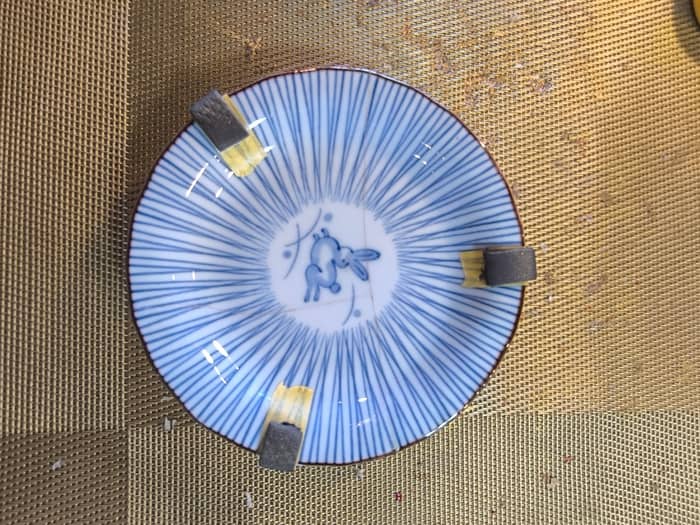
One hour, the shortest slot
★ 4.8 · 1,112 ratings
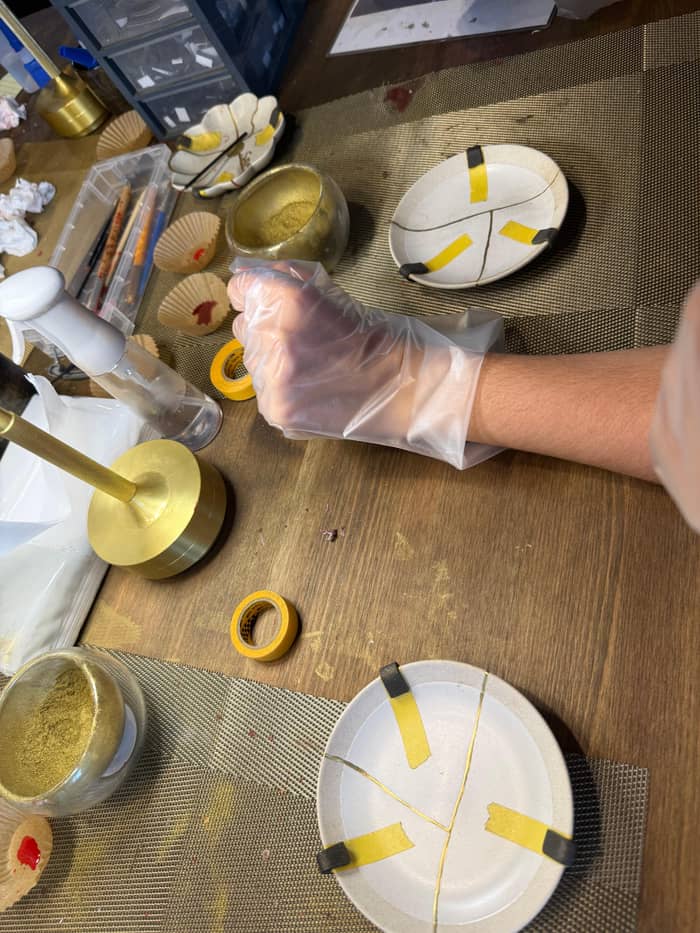
One hour, gold on ceramics
★ 4.9 · 450 ratings
Pottery workshop, 90 minutes
★ 4.8 · 354 ratings
What the rows on the left measure
Our pick against two one-hour GetYourGuide classes in Gion and a pottery-style workshop, rated and priced live.
Starting price for one person, as each seller lists it right now.
Reviews
★★★★★2,155 ratings counted
the class in detail
You sit down in a studio near Gion and Kawaramachi, on the 4th floor of a building that also holds a curry restaurant called SPICE HOLIC, with a live guide in English and a group of up to 10. The work is simple to describe: you repair a cracked or chipped ceramic piece, a bowl or a plate, using lacquer and gold powder.
An experienced instructor explains the basic techniques as you go, and you also hear how kintsugi began and the Japanese idea of valuing imperfection. The listing names no skill requirement and describes an instructor guiding you through the basic techniques.
At the end the repaired piece is a souvenir you take away. The listing names gold powder but gives no purity, no lacquer type and no setting time, so ask the instructor when you arrive and about care afterwards. Plate options and upgrades cost extra, and food and drinks are not included. If you want the wider context of the craft first, our guide to what kintsugi means covers it.
Open the dates and cancel for freeBeyond the workshop in Kyoto
Things to book around Kyoto and the surrounding area, priced live on GetYourGuide, each with a free-cancellation window.
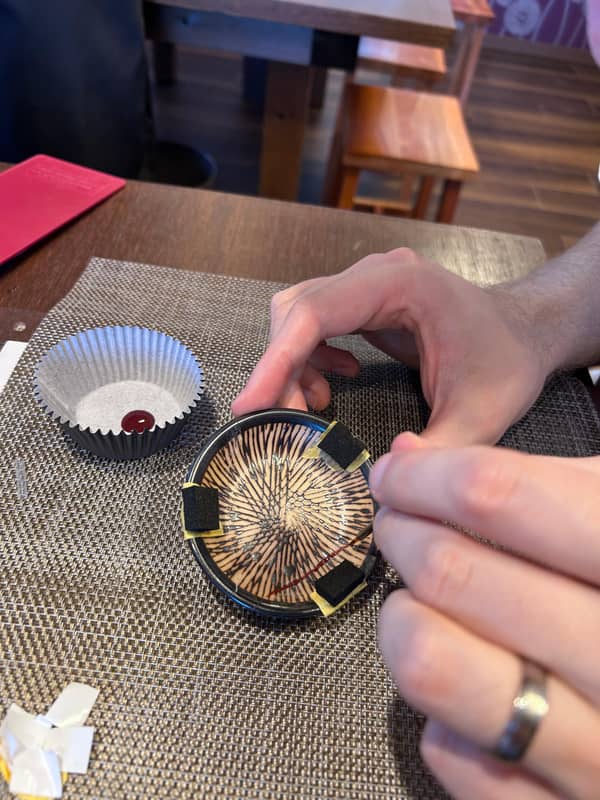
★ 4.9 (844)1.5 hrsFree cancellation
from$24
View tour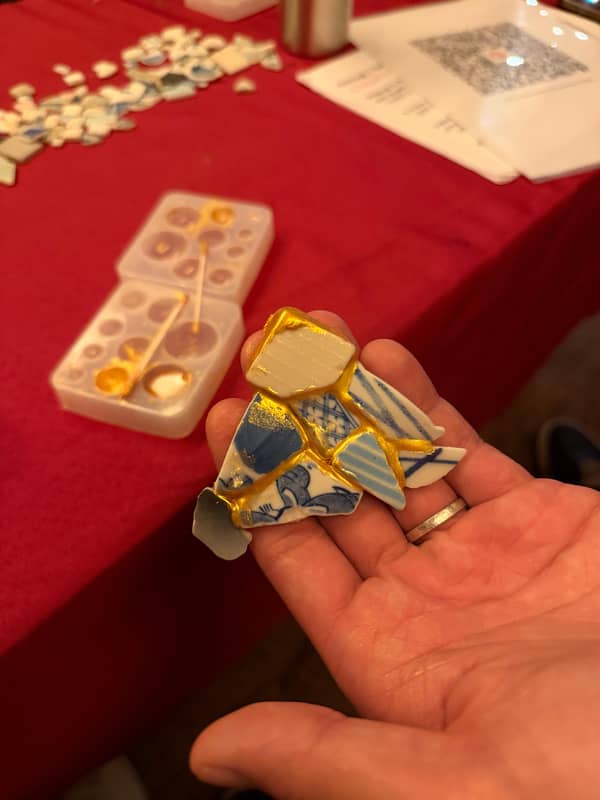
★ 4.8 (113)1.5 hrsFree cancellation
from$44
View tour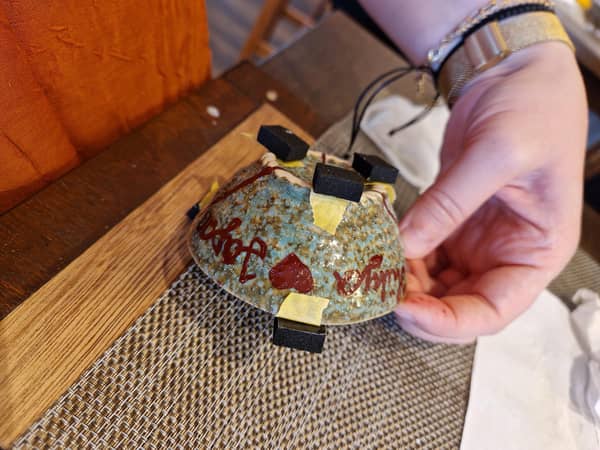
★ 4.9 (94)1.5 hrsFree cancellation
from$10
View tour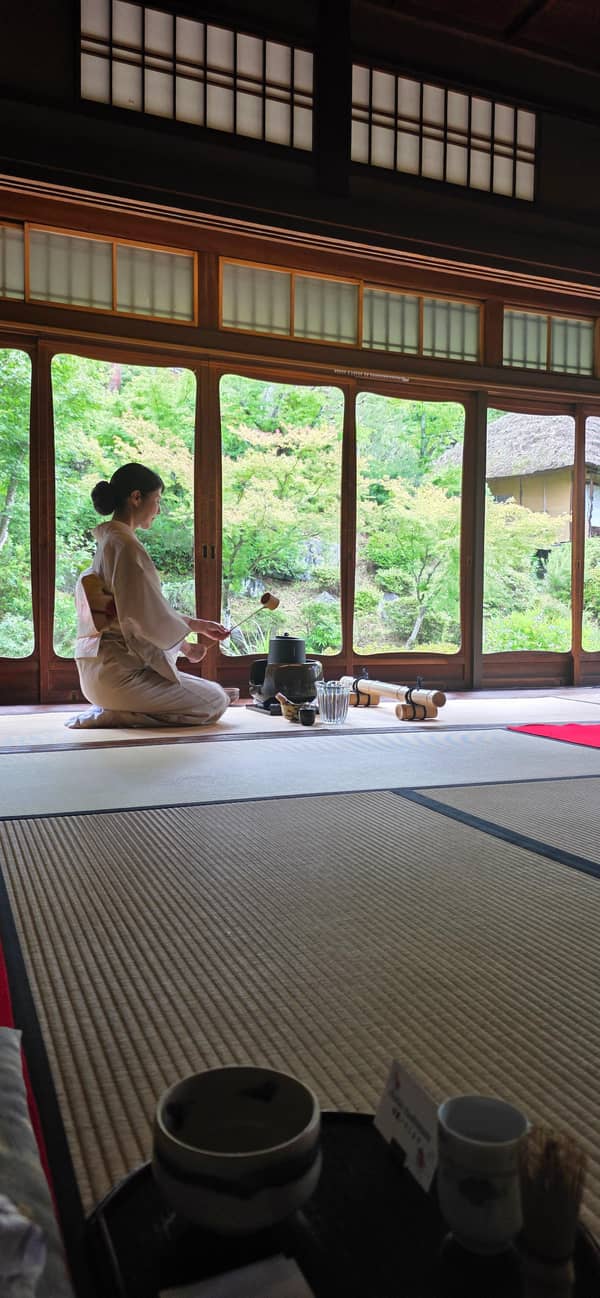
★ 4.8 (4,282)45 minFree cancellation
from$49
View tour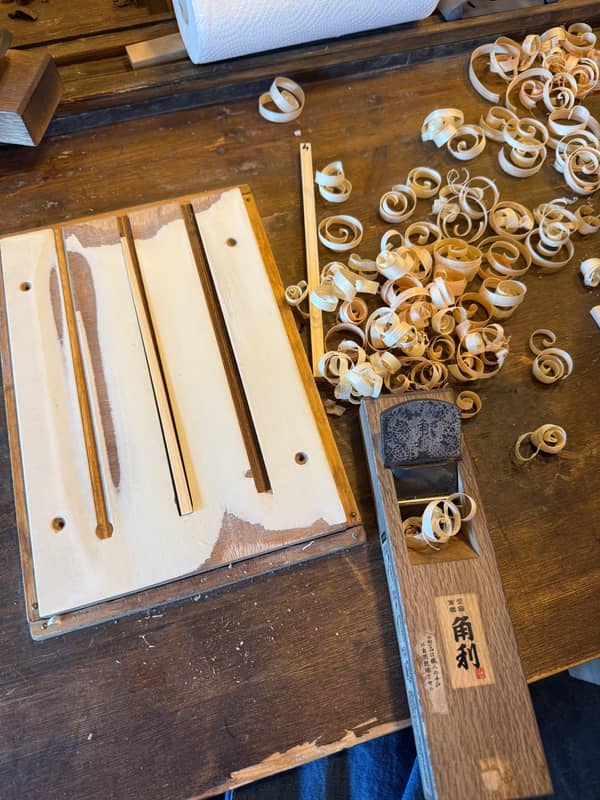
★ 4.9 (3,415)30 minFree cancellation
from$6
View tour
★ 4.8 (1,218)Free cancellation
from$21
View tour
★ 4.9 (938)5 to 5.5 hrsFree cancellation
from$86
View tour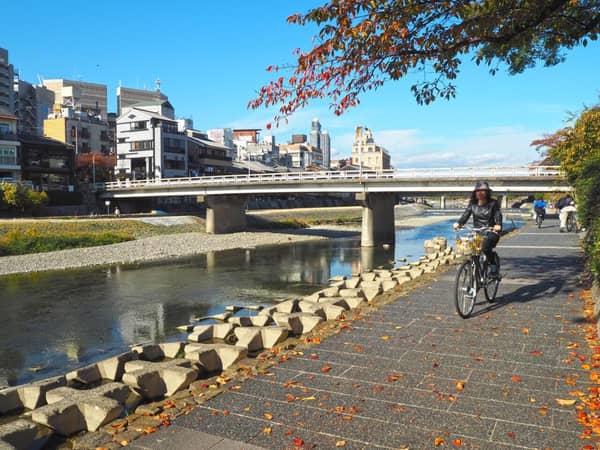
★ 5.0 (3)6 hrsFree cancellation
from$1,337
View tourEverything listed for Kyoto on GetYourGuide
Open Kyoto listingsGallery
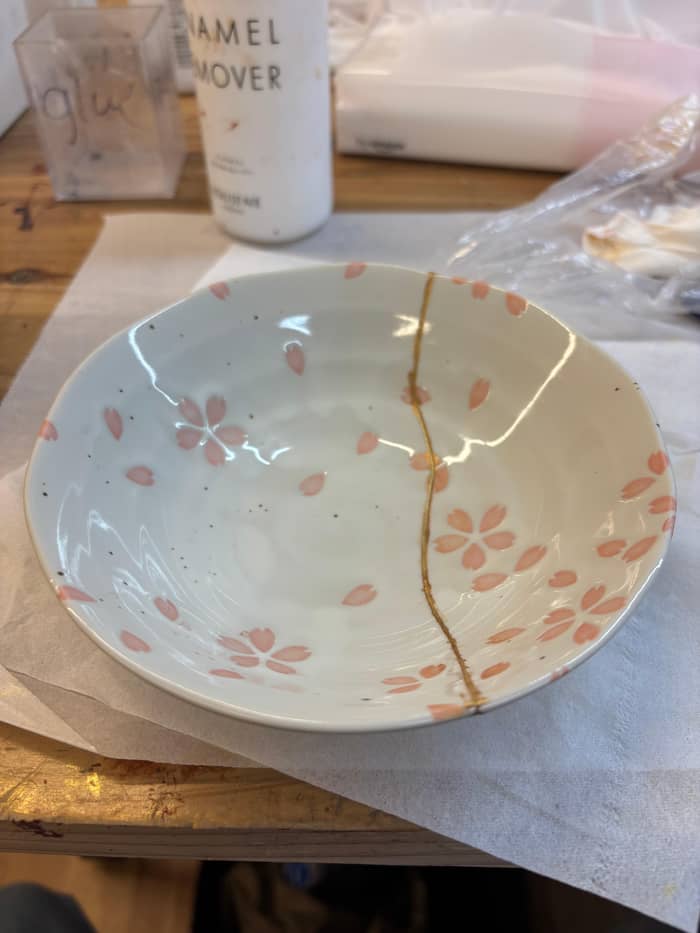
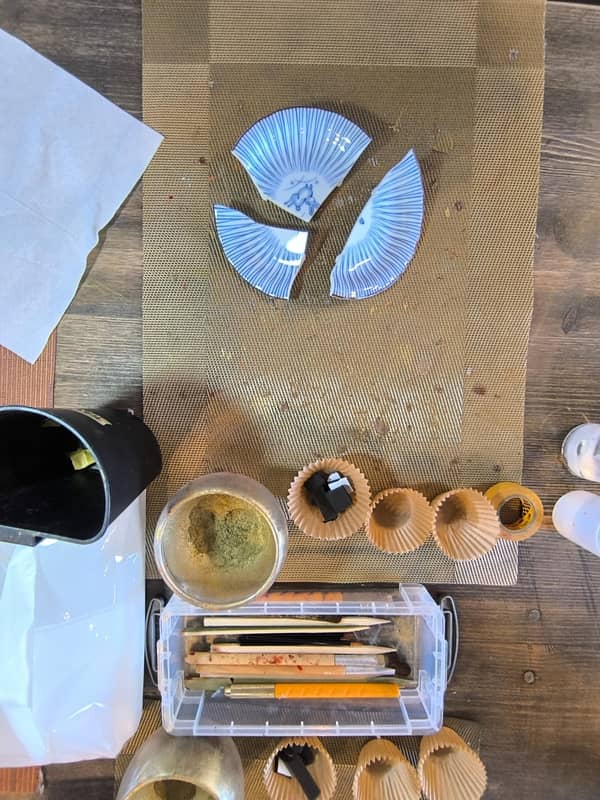
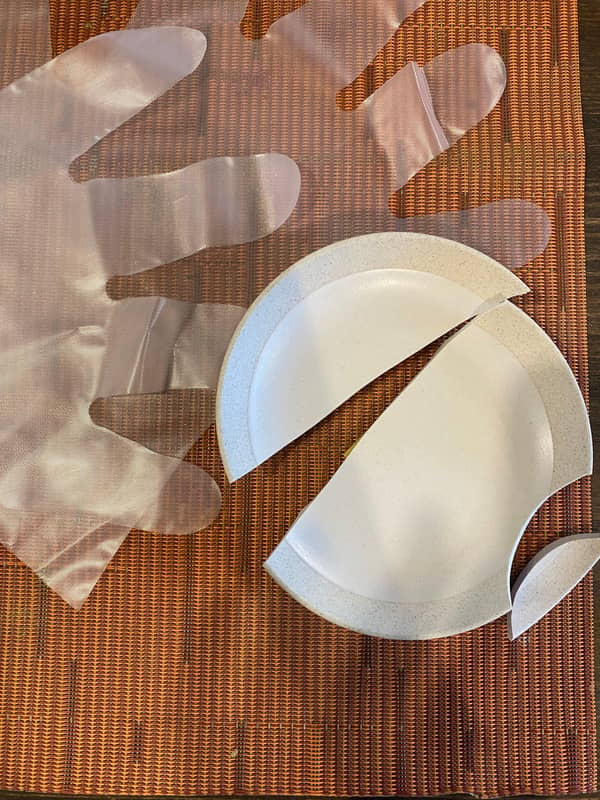
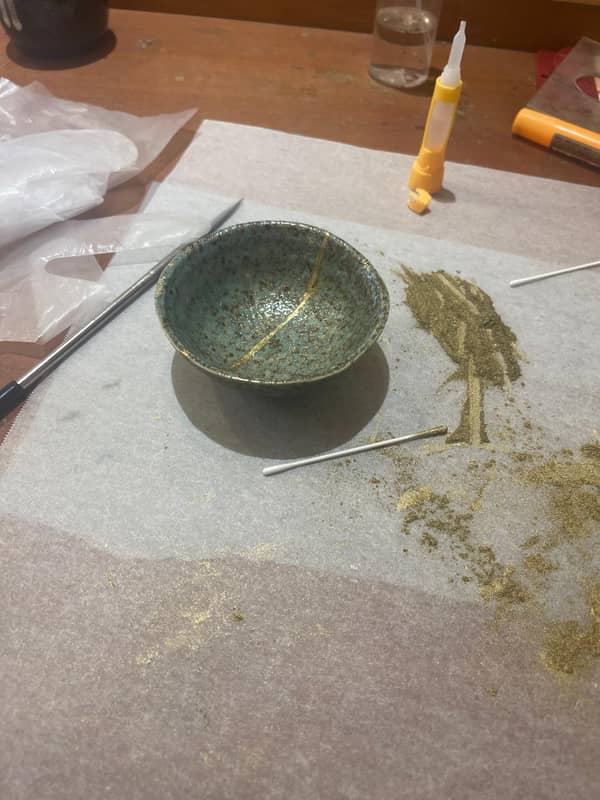
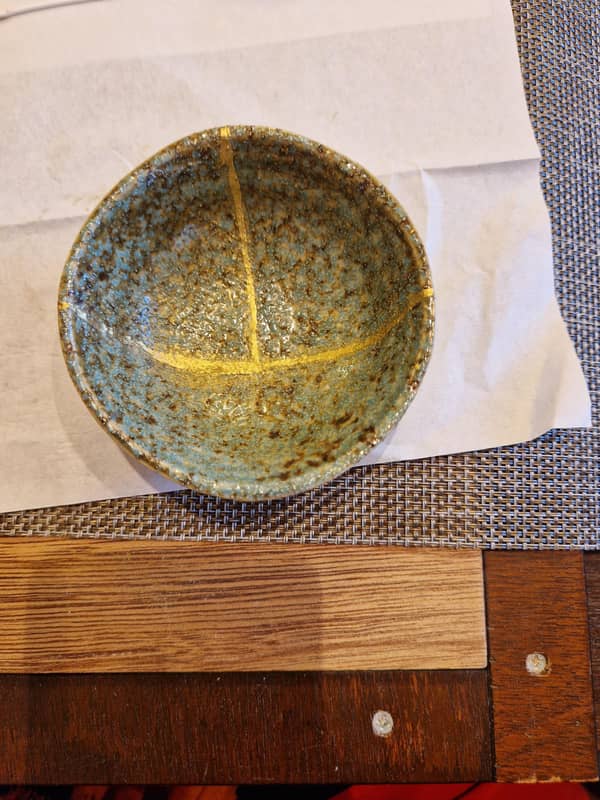
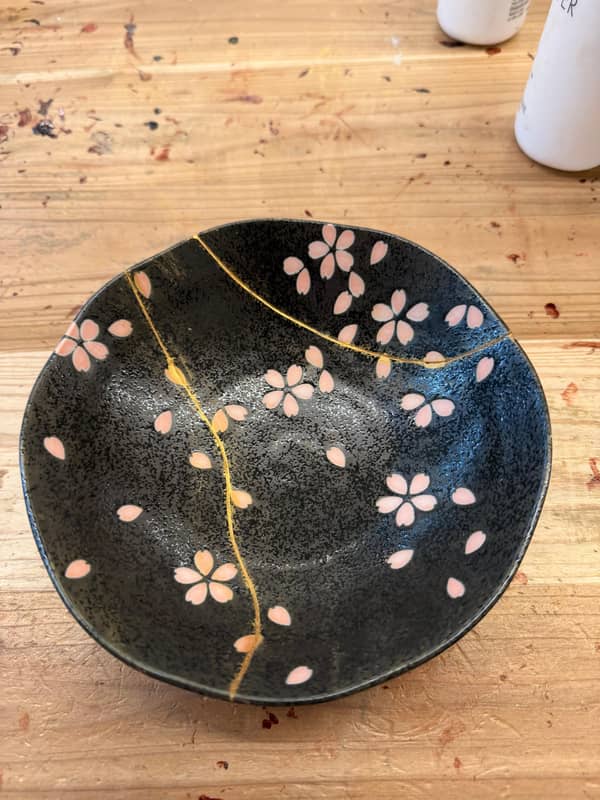
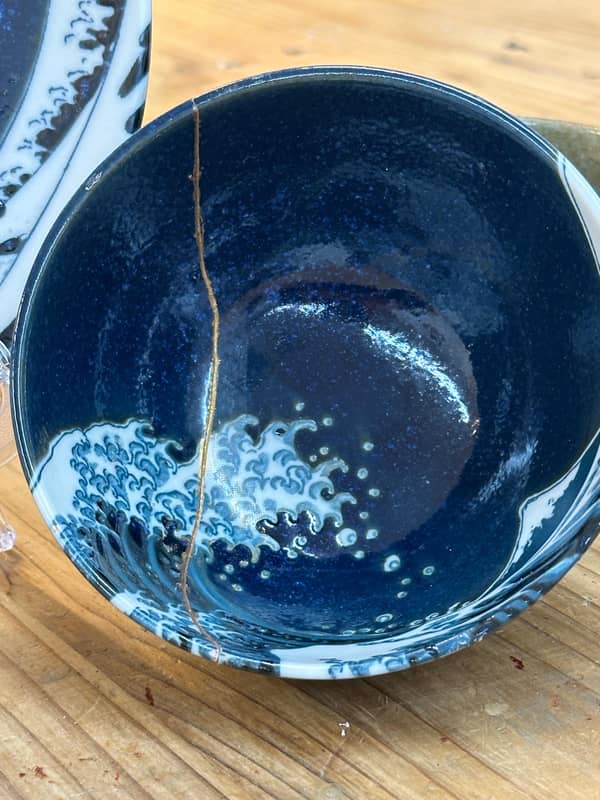
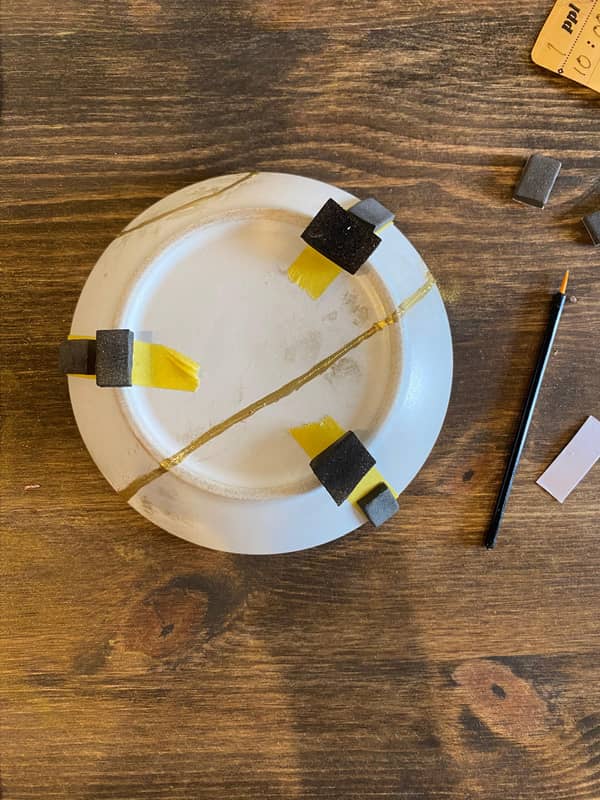
Pieces from kintsugi sessions
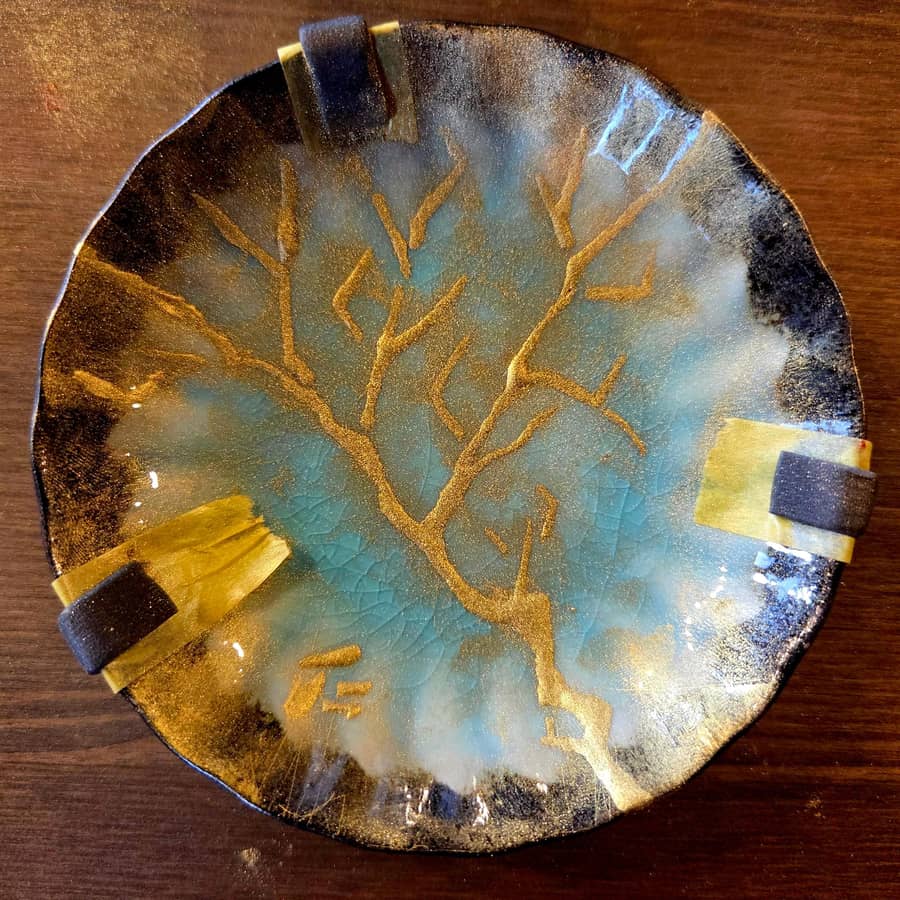
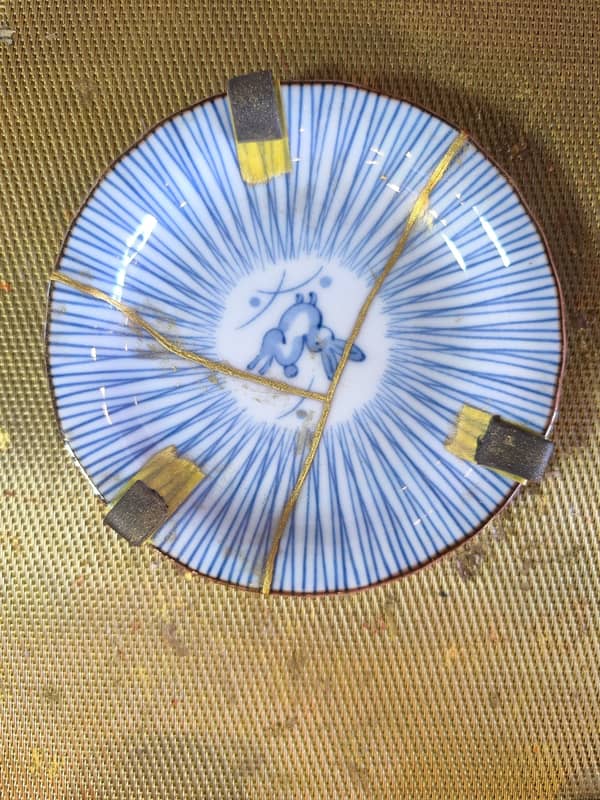
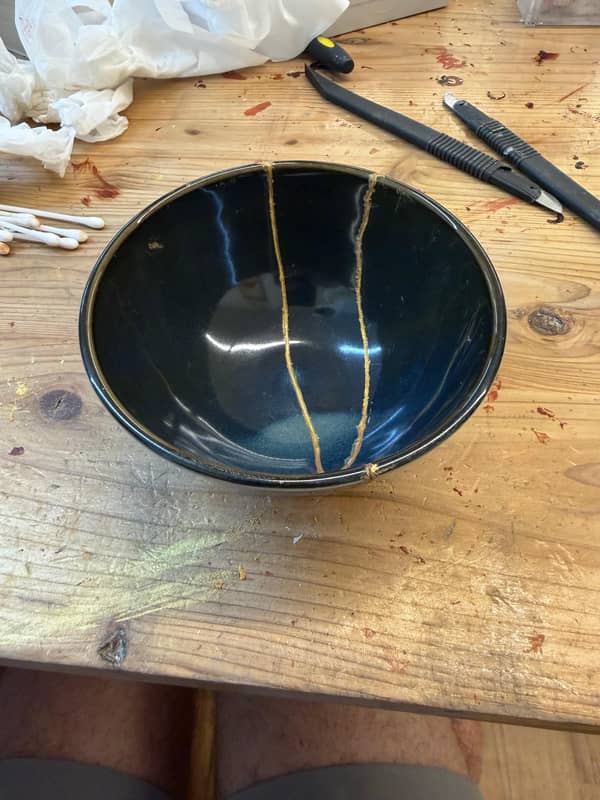
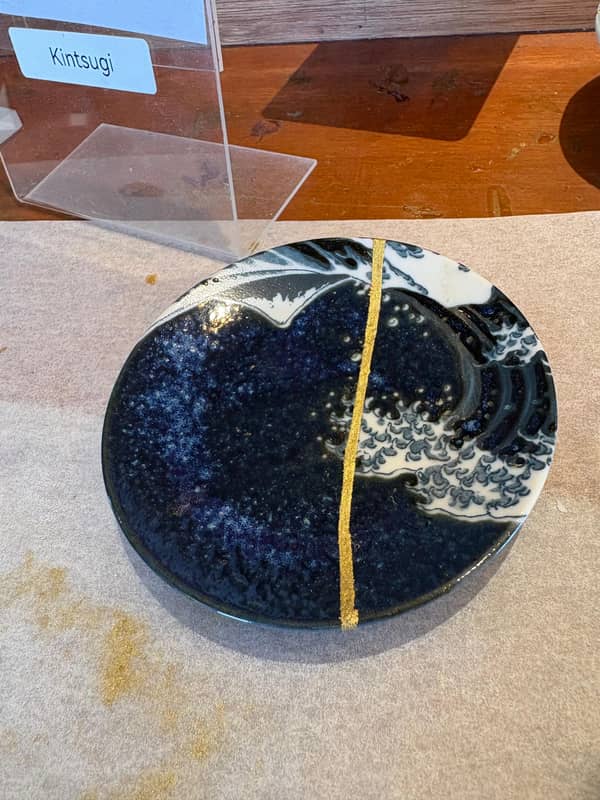
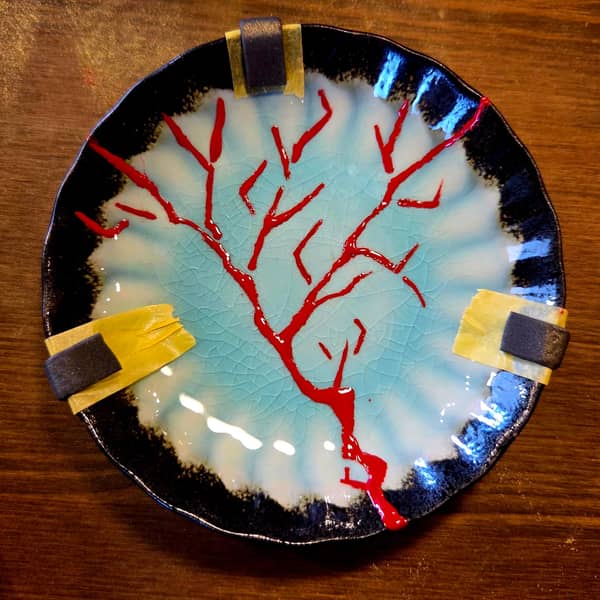
why kintsugi
Kintsugi translates to golden joinery, and it applies gold, silver or platinum as a mending filler for broken pottery. Japanese artists developed the method more than 500 years ago, and it treats breakage as part of an object's beauty and history rather than something to disguise.
Kintsugi in Kyoto sits in good company. Kyoto lacquerware technology was established in the Nara period and became popular together with the tea ceremony, and Kyoto ceramics grew into a production center in the Azuchi-Momoyama period. A craft made from lacquer and pottery is at home in a city with both traditions.
In 2015 two Kyoto lacquerware artists, Shimode Muneaki and Sato Takahiko, demonstrated kintsugi in a video from Oxford's Pitt Rivers Museum, a time-consuming and delicate process with lacquer and powdered gold. A class is a short way to see what they were demonstrating.
Open the dates and cancel for freeWeather
Monthly highs, lows and days of rain from NOAA's Kyoto station 4.4 km away, 1971 to 2020; day length is our own calculation.
Choose a month to read its warmth and rainfall.
price and cancelling
The class starts from $18 per person. That is a from price, which is the starting figure for one person and not a quote, and the exact price for your date appears on the booking panel on this page, live from Viator.
Cancelling is easy: tell the platform a full 24 hours beforehand and the money comes back in full. Because the refund is full until then, you can book a date now and still change plans later. Set a reminder for the day before in case your itinerary shifts.
Compared with other Kyoto sessions, this one is in the lower half of a price range that runs from $9 to $105. A kintsugi pottery class from the same operator starts at the bottom of that range, and a jewelry class using natural stones at the top. The comparison table lower on the page sets four sessions side by side.
Open the dates and cancel for free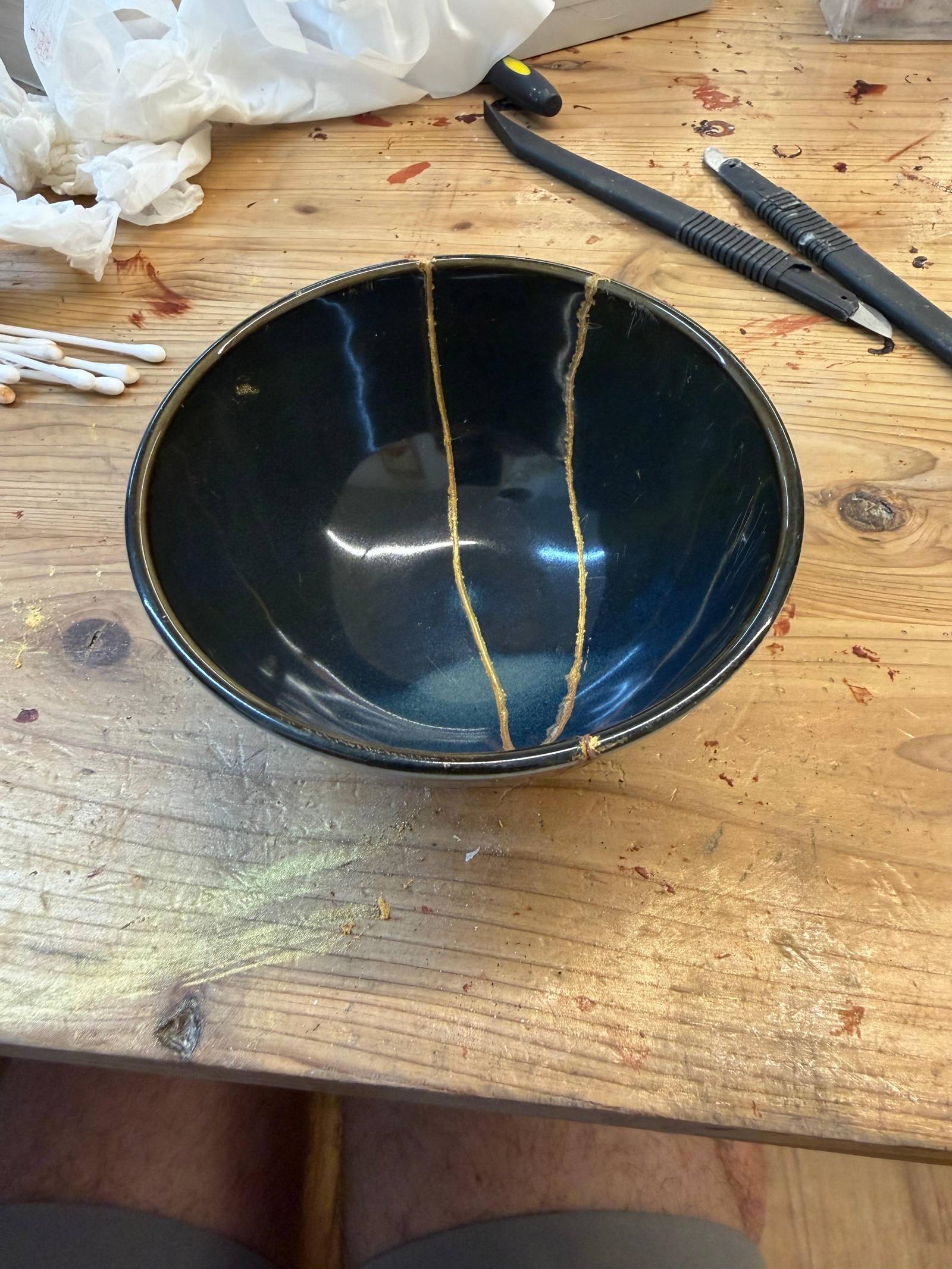
Your kintsugi hour
Choose a day near Gion, keep your plans flexible, and cancel for free until the day before.
finding the studio
The studio is described as being near Gion and Kawaramachi, in the old center where visitors already spend time, which suits a kintsugi experience in Kyoto built around a walk. The meeting point is the 4th floor of a building that also holds the curry restaurant SPICE HOLIC, so look for that name at street level.
The Kyoto City Tourism Association suggests riding the JR Nara Line to Tofukuji Station and transferring to the Keihan Line for Kiyomizu or Gion. Its one-day subway and bus ticket covers all subway and city bus lines, plus Kyoto Bus, Keihan Bus and West Japan JR Bus, excluding some routes.
A chopstick workshop meets one minute on foot from the Yasaka Pagoda in Gion, which makes a second craft stop easy to add before or after the class. Our craft workshops guide has a map of the stations and landmarks that anchor the area.
Open the dates and cancel for freeThe rating
The bars count all 2,155 star ratings this class has on Viator; their average is 4.9.
from $18 each · free cancellation to 24 hrs
Cancel for free until 24 hours before · Viator
the star counts
The class has 2,155 ratings on Viator, averaging 4.93, and 2,034 of them are five-star. The rest are spread thinly: 89 four-star, 29 three-star, 1 two-star and 2 one-star ratings. That is a large sample with a heavy lean to the top score.
We cannot read review text for this listing, so we do not quote guests or describe what they praised. We report only the counts, which are the part of the record we can verify. If you want a second opinion, compare the sister classes on our comparison page, which line up eight Kyoto sessions by rating count and price.
A fair reading: the class is well proven and well run, and the few unhappy ratings are a thin scatter. A class is a short, small, personal experience, so one guest's day can differ from another's. Treat the average as a good sign, not a promise.
Open the dates and cancel for free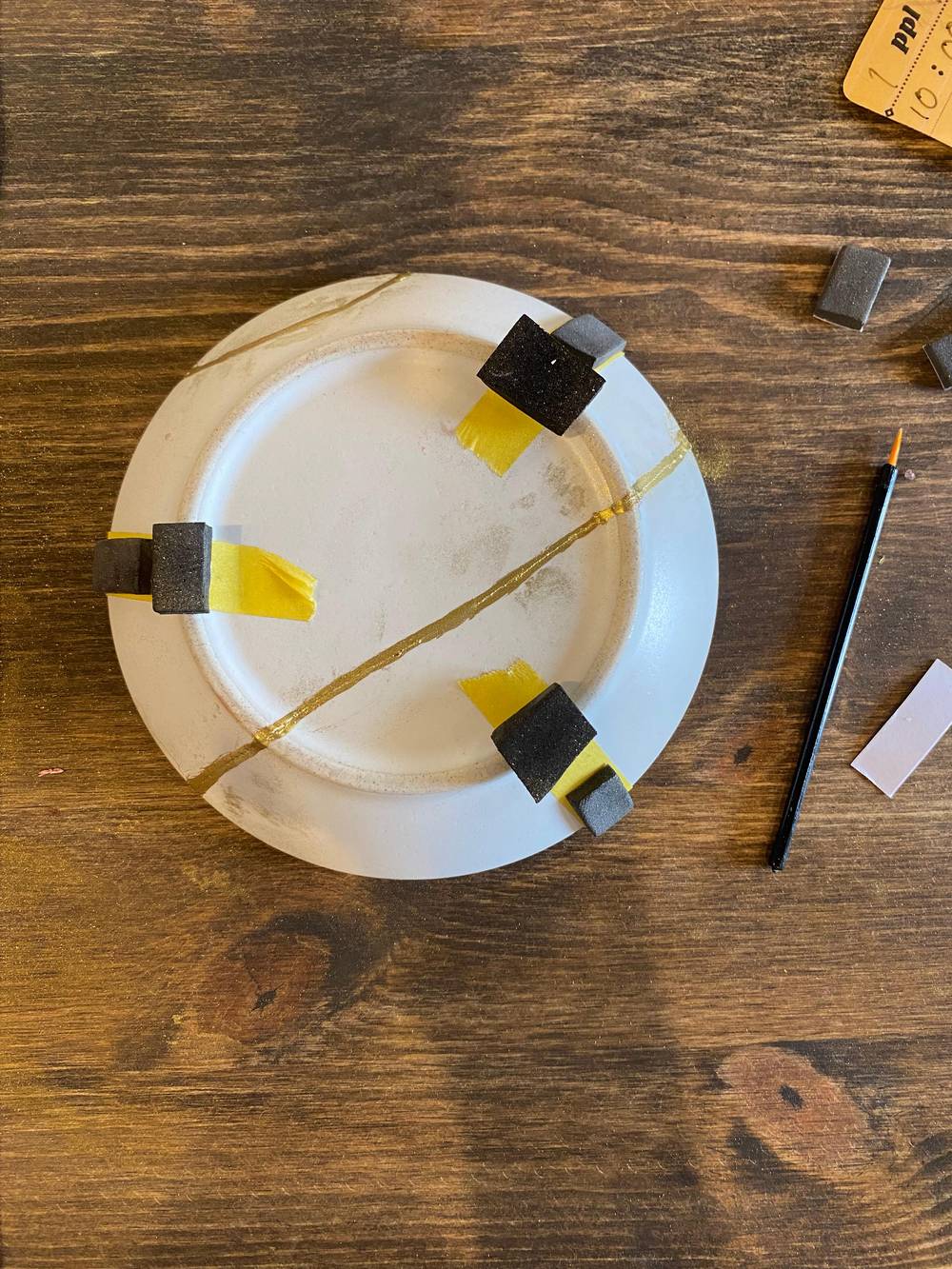
FAQ
It is on the 4th floor of a building that also holds the curry restaurant SPICE HOLIC.
The session runs 1.5 hours.
The class takes a group of up to 10 with a live guide in English.
You repair a cracked or chipped ceramic piece with lacquer and gold powder and take it away.
That is a starting price; the exact price for your date shows on the booking panel.
You get a full refund if you cancel at least 24 hours in advance.
An instructor guides you through the basic techniques.
Gold powder is the classic finish but costs much more than brass, and the listing names gold powder without giving its purity.
Of those ratings, 2,034 are five-star.
The wet season, tsuyu, lasts from early June to mid-July, and the city association recommends indoor attractions then.
on a wet day
The workshop is indoors, which helps in a city with a defined wet season. Kyoto has a wet season of its own, called tsuyu, that lasts from early June into mid-July, and the city association points visitors to museums and other indoor attractions when the showers come.
Summer has the opposite problem. The mountains around Kyoto block cooling winds, so the city stays hot and humid, often well into September, and temperatures often rise above 35 C in midsummer. A 1.5-hour session in a room away from the street is a welcome break from that.
Winter temperatures in Kyoto can drop below 5 C, and spring starts to warm up day by day from mid-March. The chart further down the page shows the monthly heat and rain at the Kyoto weather station, so you can pick the season you prefer.
Open the dates and cancel for freeHow old the idea is
Japanese artists developed kintsugi more than 500 years ago.
The technique treats breakage as part of an object's beauty and history rather than something to disguise, which is the idea every class tries to pass on.
the materials
The binder is urushi, a lacquer made from the sap of the urushi tree. It is toxic, belongs to the poison ivy family, and irritates the skin and throat of sensitive people, so mention any sensitivity to the instructor. Gold powder is the classic finish but costs much more than brass powder, which museum conservators use for practice.
In the traditional method, the metal powder goes on before the urushi has completely dried, and the lacquer then needs another week in a humid chamber to set completely. No visitor class lasts that long, so a short session is a compressed version of the craft rather than a copy of it.
A museum conservator says it takes a lifetime to become a master of kintsugi. Go in knowing that: you are learning the principle and the feel of the brush, and taking home something you made, not training to become a restorer. That is a perfectly good reason to book.
Open the dates and cancel for freeThe Kyoto class in brief
Our pick among the kintsugi workshops in Kyoto is a 1.5-hour session in a studio near Gion and Kawaramachi, for a group of up to 10 with a live guide in English. You repair a cracked or chipped ceramic piece with lacquer and gold powder and keep the finished work. It carries 2,155 ratings averaging 4.93 and starts from $18.
You may cancel at no charge until a day out
other crafts
Kyoto has many small workshops. A chopstick-making workshop near the Yasaka Pagoda has 4,624 ratings and starts from $6, and a coin ring workshop has 3,144 ratings and starts from $13. Both run 1 hour, so either fits next to a kintsugi session.
Dyeing is the longer option. A roketsu dyeing experience runs 2 hours from $25, and a Yuzen dyeing class runs 2 hours for up to 6 participants. Kyo-Yuzen is one of the three major styles of Yuzen dyeing in Japan.
Our craft workshops guide compares eight sessions, with a map of Gion, Okazaki and the Kiyomizu-yaki district, and our pottery guide explains the difference between mending a pot, shaping one, and visiting the pottery district. Between them they make a good second and third day.
Open the dates and cancel for free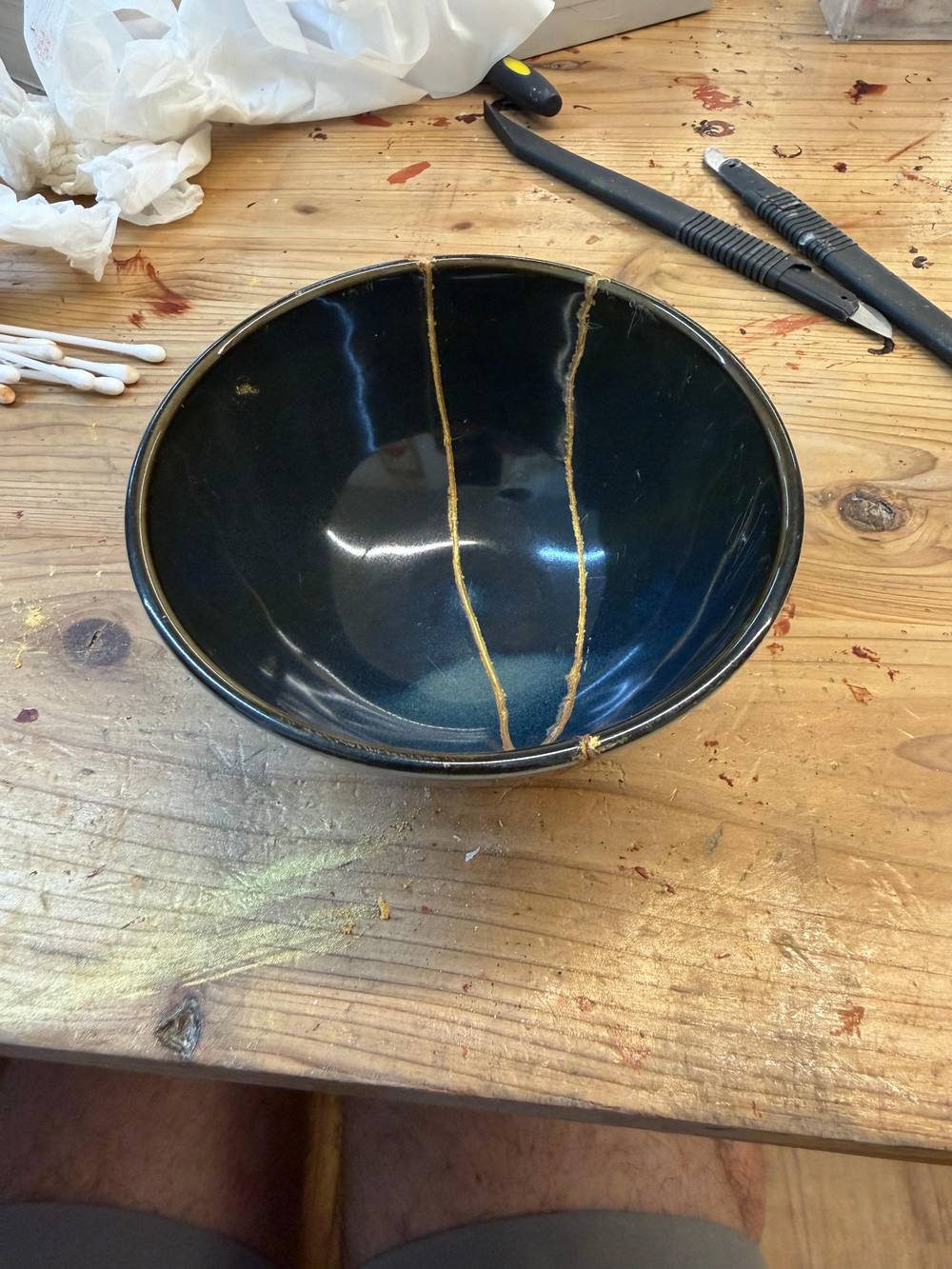
beyond kyoto
If your route runs through Tokyo, an Asakusa kintsugi class runs 1 hour, takes up to 30 people and starts from $15, with 1,300 ratings. A Namba class in Osaka takes up to 5 people for 1.5 hours and starts from $123.
JR Central says you can reach Kyoto from Tokyo in about 130 minutes by Shinkansen. That is an easy ride, but nobody should cross Japan for a single short class when the same craft is on offer where they are already staying.
Our Tokyo and Osaka guide compares seven classes in the two cities by length, class size and price, and explains why one listing titled as Osaka is actually a Kyoto workshop. It also tells you when waiting for Kyoto is worth it, and when it is not.
Open the dates and cancel for freeBook now
Viator supplies the open dates and today's price in real time; nothing on this panel is typed in by hand.
bring and ask
Bring your booking confirmation on your phone and allow a few extra minutes to find the entrance, because the studio is on the 4th floor of a building with other tenants. If you have a sensitive skin, say so before the lacquer comes out.
Questions worth asking: how pure is the gold powder, how long does the seam need before the piece is safe to pack, and how should I care for the repair afterwards. The listing does not answer these, and a good instructor will be glad to.
Pack something soft to wrap the finished piece in. A spare scarf or a few sheets of paper will do. If you are traveling onward the same day, plan to carry the piece in your hand luggage rather than at the bottom of a case.
Open the dates and cancel for freeWho this class suits
It suits beginners, solo travelers and small groups who want a short, tactile hour that feels different from sightseeing. The group is capped at 10, and the instructor guides you through the basic techniques; the listing names no prerequisite.
It is less suited to travelers who want a long, deep lesson, or who want to leave with a wearable object. For the first, consider the 3-hour class in Osaka; for the second, the jewelry class in Kyoto that runs 2.5 hours. Both cost much more than this class.
Be honest with yourself about the finish too. A short beginner class compresses a slow craft, and the listing gives few details on the materials. If you want museum-grade work, a class is not the route. If you want a good hour and a piece of gold-mended ceramic to remember Kyoto by, it is a strong choice.
Open the dates and cancel for free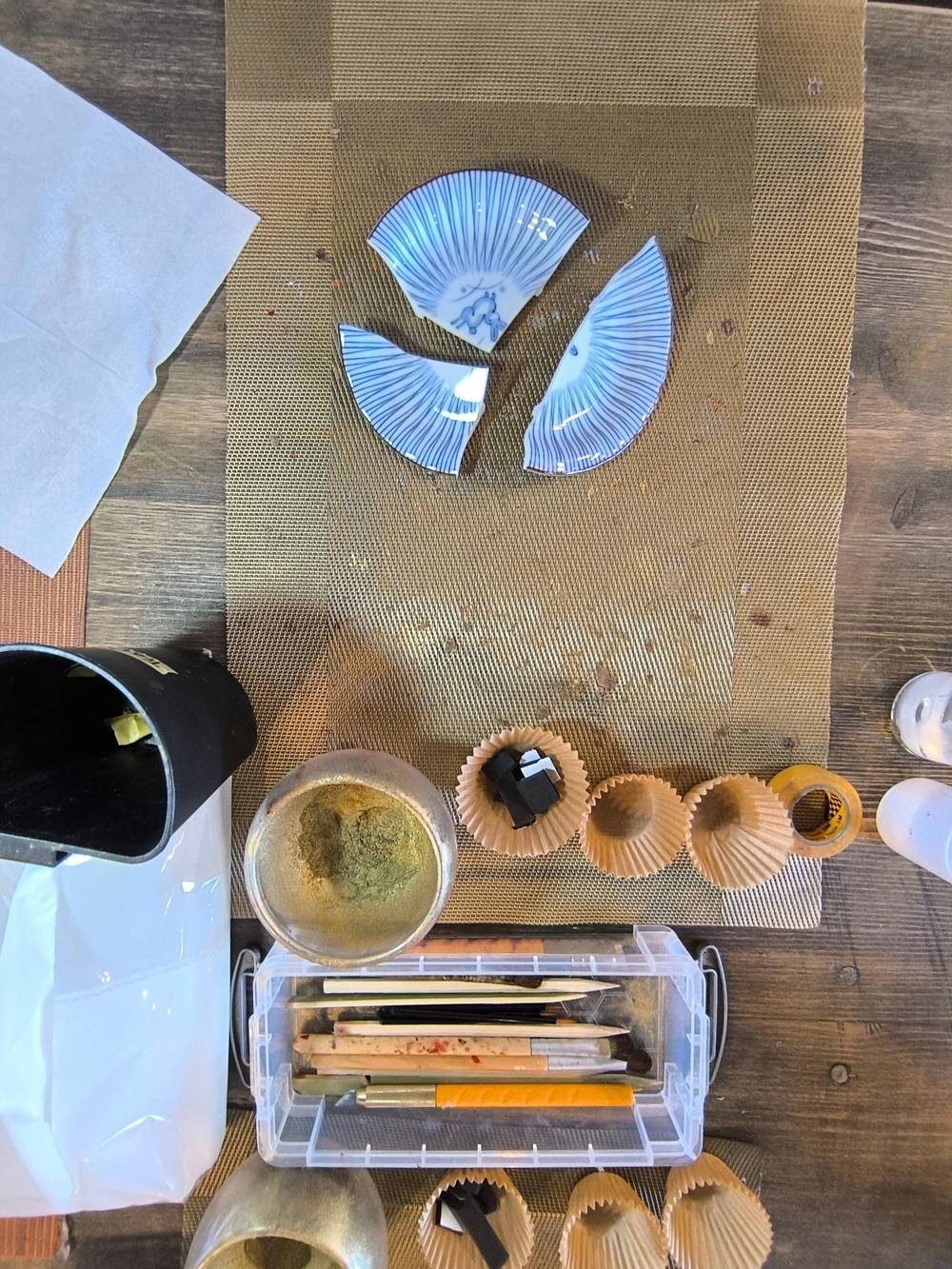
A question about the class? A person answers here.